
Should You Outsource DevOps for Blockchain infrastructure?

When infrastructure is responsible for hundreds of millions of dollars in digital assets, uptime is more than a technical metric, it is a matter of trust and reputation.
We are significant participants in the Lido network and are entrusted with $600M+ USD in Ethereum at today's prices. To support this responsibility, we operate 7,600+ ETH validators across multiple production deployments. So far, we have maintained a perfect clean sheet.
Each validator group is supported by redundant infrastructure, with a primary and failover node. A typical node requires approximately 10 CPU cores, 40 GB RAM and 3 TB NVMe, alongside dedicated signer infrastructure.
Across this workload alone, our infrastructure footprint exceeds:
320+ CPU cores | 1.1+ TB RAM | ~140 TB storage
And this is just one of the many services we operate continuously, 24 hours a day, 7 days a week.
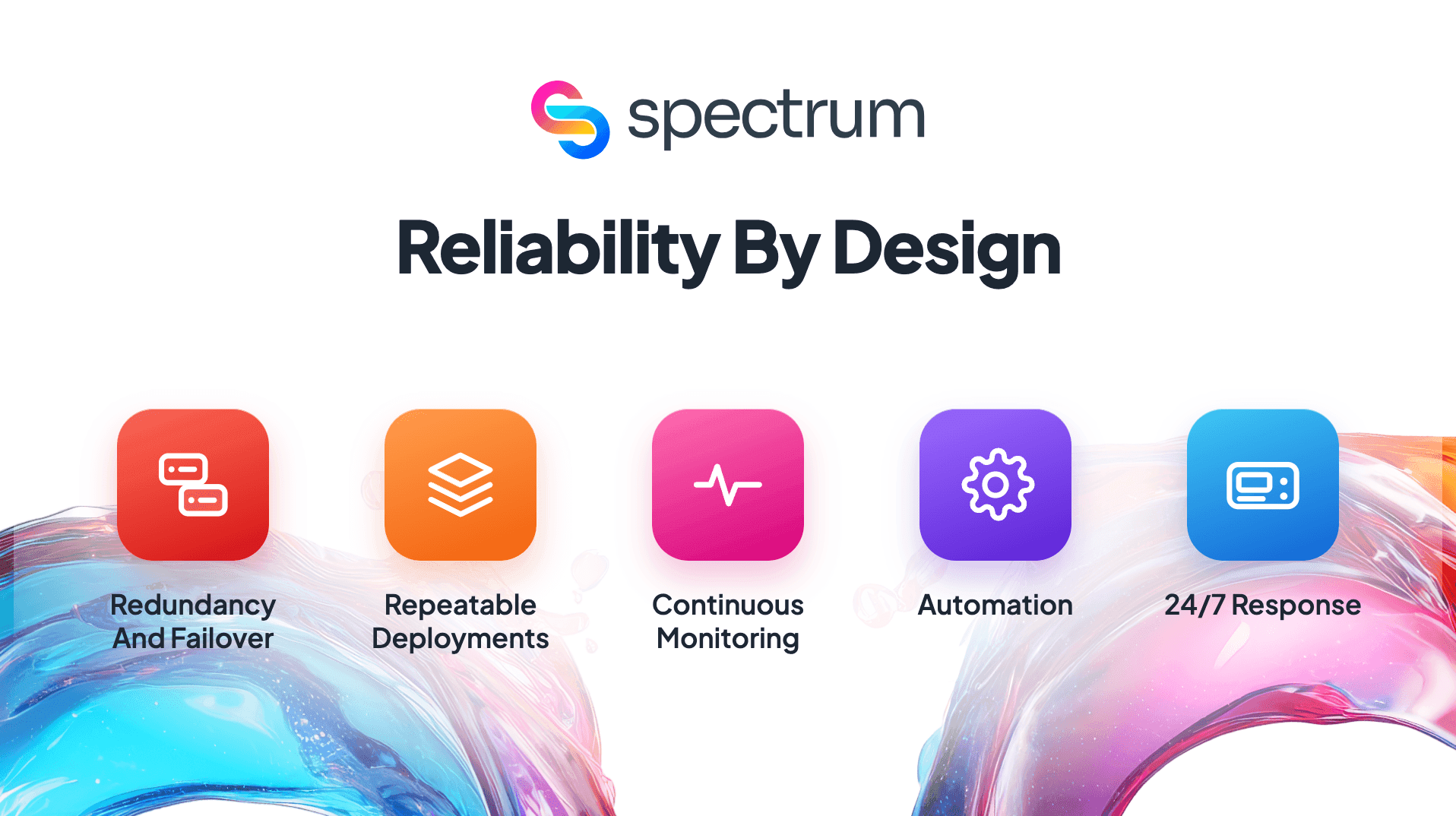
Reliability by Design
Maintaining this level of availability requires more than simply running powerful infrastructure. Our DevOps approach combines:
- Redundancy and failover to eliminate single points of failure
- Consistent, repeatable deployments across multiple environments
- Continuous monitoring and observability to identify issues early
- Automation and operational processes that reduce manual intervention
- 24/7 engineering responsiveness when incidents occur
The key is not just having infrastructure capable of running 24/7, it is having the engineering discipline and operational capability to support it 24/7.
Operating thousands of validators and a diverse portfolio of production workloads has given us experience managing infrastructure where reliability, rapid response and consistency are non-negotiable.
Our DevOps capability is proven not by what we say we can operate, but by what we continuously operate, at scale, around the clock, with uptime and trust on the line.