What Is Monad Crypto? Monad in 2026 Explained
Updated October 22, 2026 · Spectrum Nodes
Short answer: Monad is an EVM compatible layer 1 blockchain that executes transactions in parallel to raise throughput. Its mainnet went live on November 24, 2025. Since the MIP-12 hard fork in July 2026, Monad produces 300 ms blocks with 600 ms finality and states 10,000 TPS, per the Monad Foundation. Developers deploy Solidity contracts with Ethereum tools, and Spectrum Nodes serves Monad RPC and APIs.
Before mainnet, most discussion of Monad relied on testnet results and design assumptions. Chains often look fast in isolation and behave differently once usage begins.
With live users and transactions on the chain, you can now judge how Monad performs under load, how developers build on it and whether apps run reliably at scale. This guide covers what Monad is, how it works, what changed since mainnet and how the ecosystem is growing.
What Is Monad Crypto?
Monad is a layer 1 blockchain built for high throughput apps that stays compatible with the Ethereum Virtual Machine (EVM). The EVM is the execution environment that runs Ethereum smart contracts, so you keep Solidity and your existing Ethereum tooling without rebuilding anything.
Monad scales by processing more transactions in parallel while keeping execution predictable. It does not rely on bigger blocks or less decentralisation to get there.
| Fact | Monad |
|---|---|
| Type | Parallel execution EVM layer 1 |
| Mainnet launch | November 24, 2025 |
| Block time | 300 ms since MIP-12 (July 2026), down from 400 ms |
| Finality | 600 ms since MIP-12, down from 800 ms |
| Stated throughput | 10,000 TPS |
| Validators | About 200 in 30+ countries |
| Consensus | MonadBFT |
| Native token | MON |
Source: Monad Foundation, accessed October 2026.
For full technical detail, see Monad's official documentation.
How Does Monad Work?
Monad combines three design choices: parallel execution, asynchronous execution and MonadBFT consensus. Together they raise throughput without giving up consistency.
Most blockchains process transactions one at a time. As usage grows, transactions queue, processing slows and costs rise. Monad changes how execution is structured at the system level.
Parallel Execution
Parallel execution means running transactions at the same time when they do not share state.
On Ethereum, transactions run sequentially even when they are unrelated, so a simple transfer and a complex contract call compete for the same execution slot. On Monad, two transactions that touch separate accounts or contracts run simultaneously.
Transactions that touch the same data still run in the correct order, so the final result stays consistent. Separating dependent from independent transactions is how Monad raises throughput without bigger blocks.
Asynchronous Execution
Asynchronous execution lets different parts of transaction processing proceed independently instead of waiting for each step to finish. The system keeps working on whatever can be processed next.
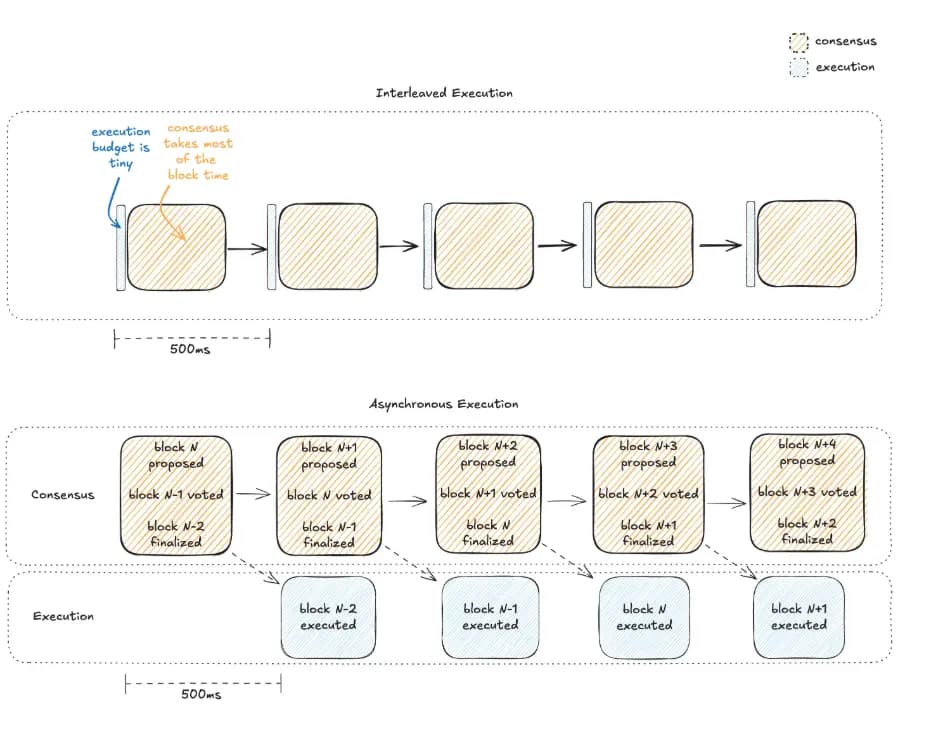
The result is less idle time. Components keep handling available work instead of waiting on each other, which helps Monad hold its speed as demand rises.
MonadBFT and Consensus
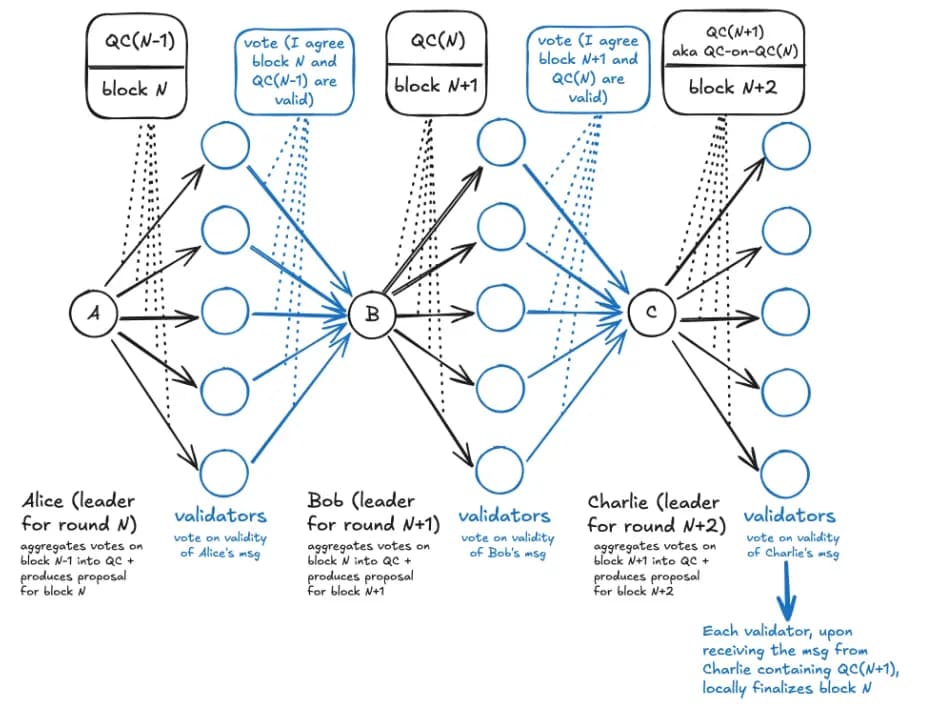
MonadBFT is Monad's consensus mechanism: the process validators use to agree on transaction order and the final state.
It targets fast finality. Finality is the point after which a confirmed transaction cannot be reversed. Apps that move value need that certainty quickly.
Execution makes processing fast. Consensus makes sure every node agrees on and records the same result.
What Does This Mean for Apps?
Monad improves execution at the base layer instead of adding external scaling solutions, and keeps Ethereum tooling intact.
- More transactions fit through without congestion
- Faster execution cuts the delay users feel
- Apps handle more activity without slowing down
What Changed After Monad Mainnet?
Mainnet launched on November 24, 2025 and moved Monad from theory into practice. Testnet let developers experiment, but only mainnet exposed the chain to live users, actual value and live transactions.
Key changes since launch, per the Monad Foundation:
| Date | Change |
|---|---|
| June 2026 | MetaMask Money Account, a self custodial dollar account with yield, launched on Monad |
| July 2026 | MIP-12 hard fork cut block time from 400 ms to 300 ms and finality from 800 ms to 600 ms |
| August 2026 | Base App added Monad, Kraken began offering MON staking and Visa Onchain Analytics added Monad |
| August 31, 2026 | One day DEX volume record of $362M, inside a record August of $3.64B |
| Proposed, not live | Cadence consensus design targeting 100 ms blocks and 200 ms finality |
| Upcoming, no date | MIP-10 RaptorCast upgrade, where validators vote before the full block arrives |
How Big Is the Monad Ecosystem?
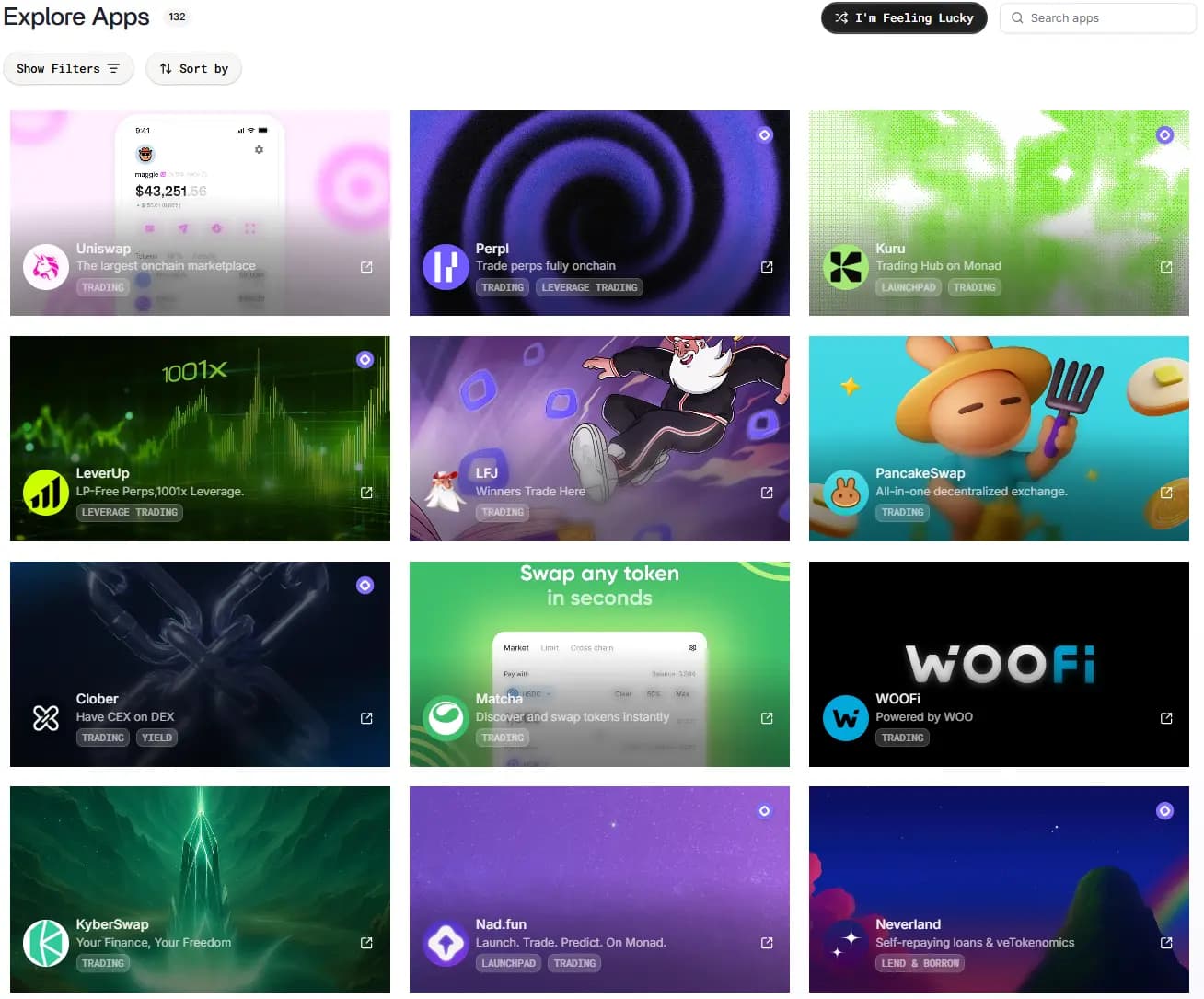
Monad grew from 132 dApps on its official App Hub in March 2026 to 170+ apps live, per the Monad Foundation. Self reported TVL passed $1.02B by August 31, 2026.
Apps
The App Hub covers decentralised finance apps, infrastructure tools and experimental platforms. Adoption is one of the clearest signs of a chain's usefulness: a blockchain without apps generates no meaningful activity.
TVL and Trading Volume
Total value locked (TVL) is the value of assets deposited in a chain's apps. Early DeFiLlama data showed Monad TVL above $300 million in early 2026, with a clear upward trend.
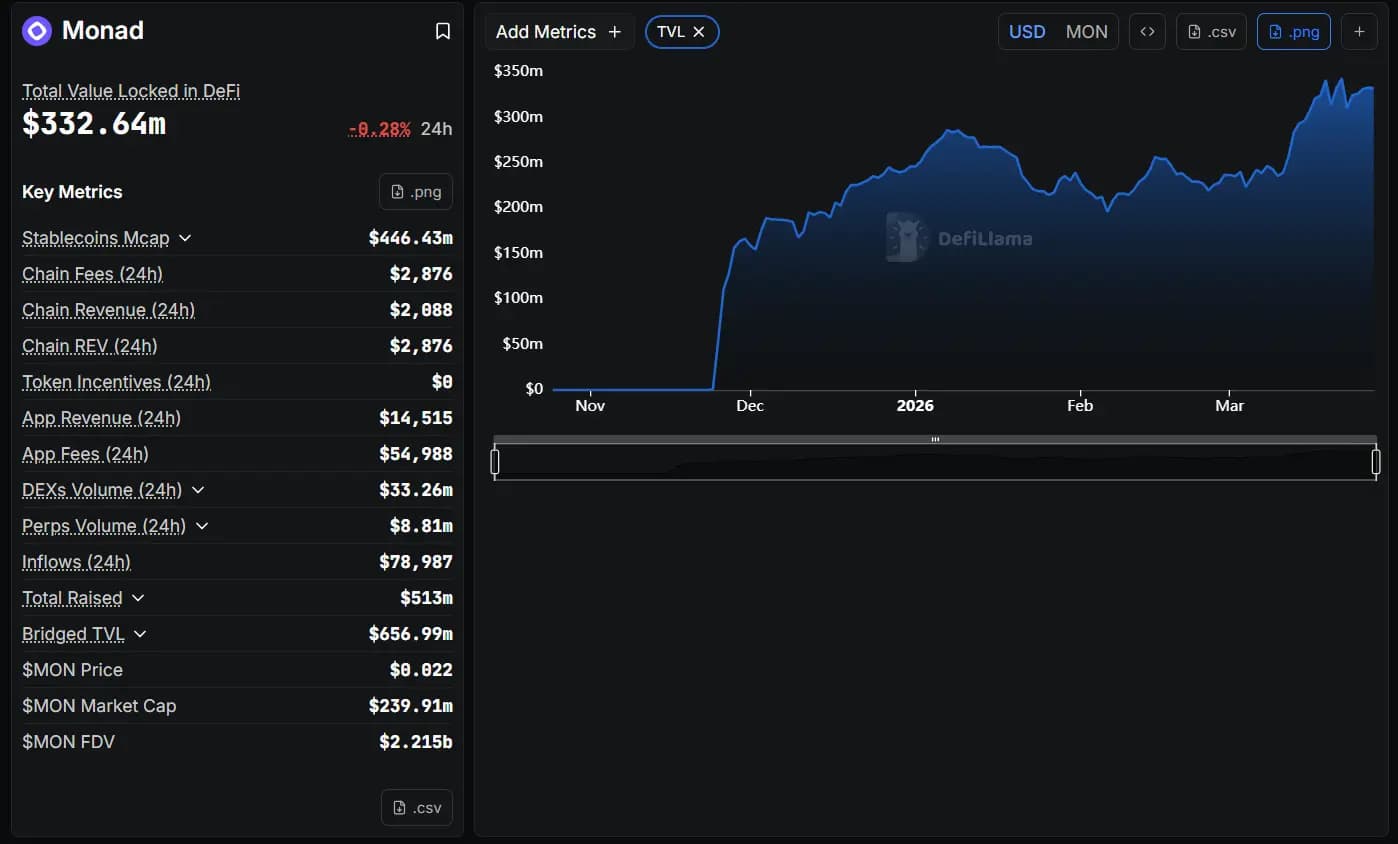
By August 31, 2026, the Monad Foundation reported $1.02B+ in TVL and $26.83B+ in cumulative DEX volume. Perpetuals volume passed $2.5B in August 2026, and over $400M in RWA value has been distributed on the chain.
Early liquidity clustered in a small number of lending and trading apps, which is common for new chains. TVL becomes a stronger signal as more apps and users spread it out.
Builder Programmes and Incentives
Monad runs builder programmes that help teams experiment and launch apps. For a new chain, strong technology alone rarely drives adoption. Attracting builders early lays the ground for ecosystem growth.
AI and Emerging Use Cases

Monad's ecosystem page lists apps across AI agents, data and robotics. Many focus on agent driven systems and automation, which need frequent updates and fast execution. It is early, but developers are testing Monad beyond traditional DeFi.
Payments and Stablecoins
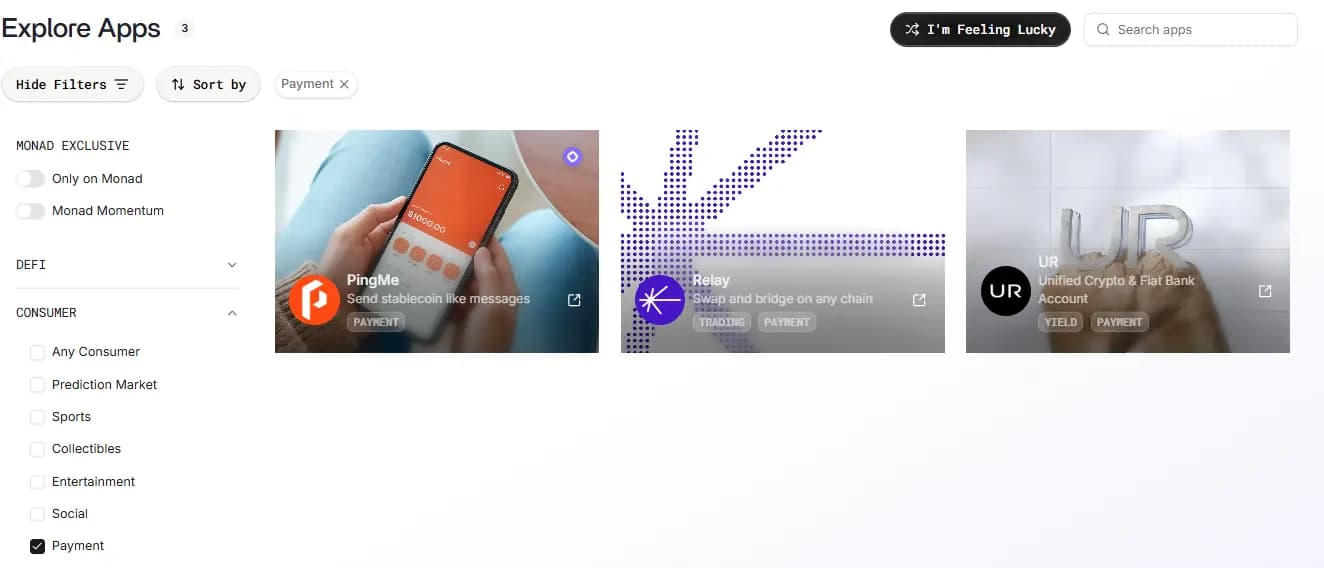
Payment apps are building on Monad too. PingMe sends stablecoins, while Relay and UR combine payments with trading and account features. The Monad Foundation also lists stablecoin and fintech builders such as Meru, Abound and Cero.
What Is the MON Token Used For?
MON is Monad's native token. You use it to pay transaction fees, and it rewards staking that helps secure the chain.
The initial total supply of MON was 100,000,000,000 (100 billion), allocated across Ecosystem Development, Team, Investors, Public Sales, Category Labs Treasury and Airdrops.
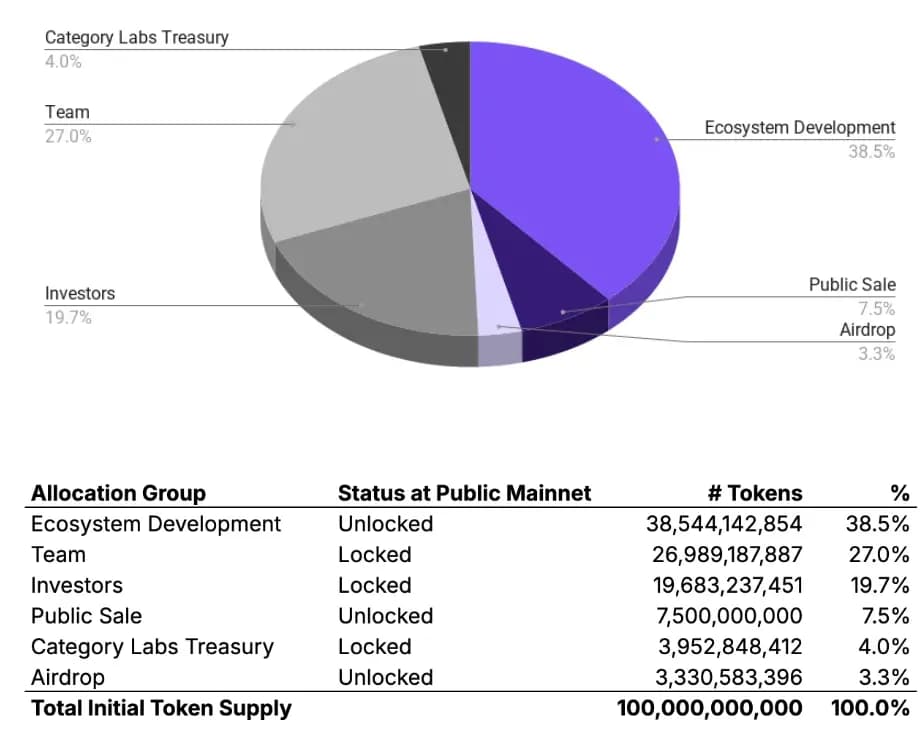
Around half of the supply was released at launch. The rest follows lockups and gradual release schedules, shown below.
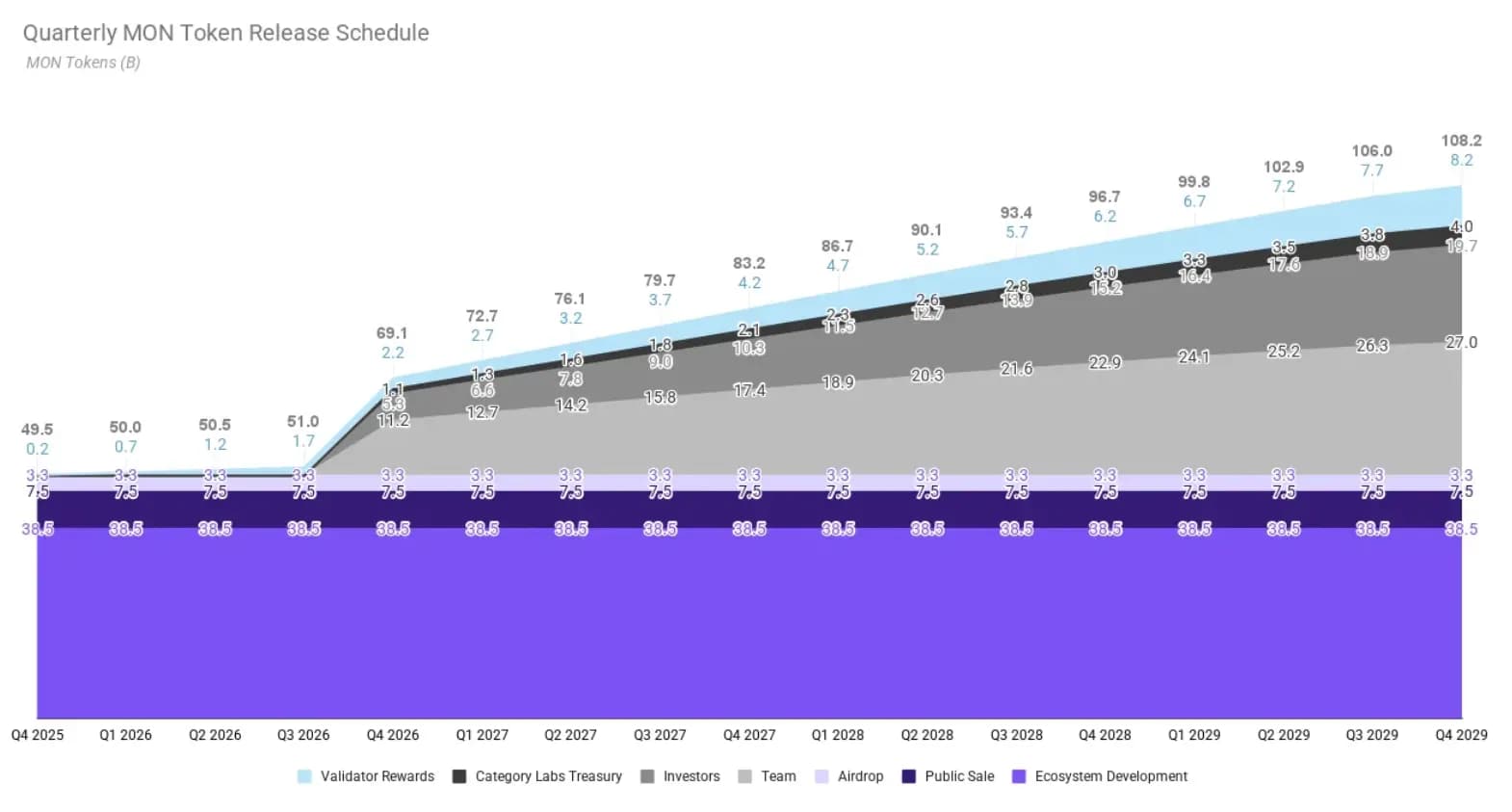
For the full breakdown, read the official MON tokenomics overview. Since August 2026, Kraken also offers MON staking.
How Does Monad Compare to Ethereum and Solana?
Monad keeps Ethereum's developer environment and changes how execution works. Solana also targets high throughput but needs a different programming environment.
| Monad | Ethereum | Solana | |
|---|---|---|---|
| EVM compatible | Yes | Yes | No |
| Execution | Parallel | Sequential | Separate programming model |
| Block or slot time | 300 ms | 12 s | 200 ms since October 2026 |
| Main priority | Execution speed with Ethereum compatibility | Security and decentralisation | High throughput |
Sources: Monad Foundation, ethereum.org and solana.com, accessed October 2026.
Every chain trades off speed, decentralisation and developer accessibility. Monad's position depends on how well it balances them in practice.
What Are the Risks and Open Questions for Monad?
Monad is live and early results look promising, but initial performance and sustained usage can differ.
- Sustained performance. Congestion, app complexity and validator behaviour can change outcomes over time
- Concentrated liquidity. A large share of early TVL sits in a small number of apps
- Self reported data. Most ecosystem metrics come from the Monad Foundation without an independent check
- Roadmap risk. Cadence is a proposal, and its 100 ms block target is not live
What's Next for Monad?
Monad's next phase depends on three signals: growth in apps, rising user activity and consistent chain performance.
Early signals point the right way. Performance has been stable and interest from developers and users is building. Not every new chain keeps momentum once early attention fades, so the focus now moves from building the technology to supporting long term adoption.
How Does Spectrum Nodes Support Monad?
Spectrum Nodes serves Monad with RPC endpoints, unified APIs and cached data. At 300 ms blocks a new block lands about three times a second, so your endpoint has to keep up with the chain tip.
- RPC endpoints. Create a Monad endpoint in the Spectrum dashboard and get RPC and WebSocket URLs per region
- APIs. Monad is one of 16 EVM chains with our full endpoint set: blocks, gas, balances, token metadata, allowances, portfolio, NFTs, smart contract reads, DeFi yields and JSON RPC
- Cached data. Live on Monad, so repeated reads come from a cache in front of our own nodes
- Freshness. From September 29 to October 14, 2026, Spectrum's nodes were on the same block as Alchemy 100% of the time, sampled every minute for 14 days, with a success rate of 99.97% or higher. That is parity with Alchemy, measured by our RPC monitor
- Testnet MON. Claim test tokens with our Monad faucet
Monad was part of our January 2026 chain expansion. See every supported chain on the networks page, and read cached vs direct node access to see when a cached read fits and when you need the node.
Is Monad Worth Watching?
Monad brings a different execution model while keeping Ethereum tools, which lowers the barrier for developers who want to try new performance models. With the chain live, attention moves from potential to observable results.
Monad will be judged on consistent performance and useful apps over time. If current momentum continues, it has the foundation to compete among the next generation of high performance blockchains.
Follow Spectrum Nodes on X for ongoing analysis of how chains like Monad perform in practice.
Can I Get Monad RPC on Spectrum Nodes?
Yes. Spectrum Nodes runs Monad RPC on Monad mainnet and Monad testnet, live as of October 22, 2026 (see our networks page). Create an endpoint in the dashboard and you get RPC and WebSocket URLs for each region.
| Network | Chain ID | Hex |
|---|---|---|
| Monad mainnet | 143 | 0x8f |
| Monad testnet | 10143 | 0x279f |
FAQ
What is the Monad chain ID? The Monad mainnet chain ID is 143 (0x8f in hex). The Monad testnet uses 10143. Spectrum Nodes serves Monad RPC on both.
What is Monad crypto? Monad is an EVM compatible layer 1 blockchain that executes transactions in parallel. Its mainnet launched on November 24, 2025, and its native token is MON. You use the same Solidity contracts and tools as on Ethereum.
How does Monad work? Monad runs unrelated transactions in parallel, processes steps asynchronously and reaches agreement through MonadBFT consensus. Transactions that touch the same state still run in order. This lets Monad raise throughput without bigger blocks.
What is Monad's block time and finality? Since the MIP-12 hard fork in July 2026, Monad produces 300 ms blocks with 600 ms finality, per the Monad Foundation. Before MIP-12, blocks took 400 ms and finality 800 ms. A proposed design called Cadence targets 100 ms blocks but is not live.
What is the total supply of MON? MON launched with an initial total supply of 100 billion tokens. Around half was released at launch, and the rest follows lockup and release schedules. MON pays transaction fees and rewards staking.
Is Monad crypto legit? Monad is funded and runs a live mainnet with 170+ apps and about 200 validators, per the Monad Foundation. It is still an emerging chain that has to prove long term adoption and performance. Most of its ecosystem metrics are self reported.
Where can I get a Monad RPC endpoint? You can create a Monad RPC endpoint in the Spectrum Nodes dashboard, which gives you RPC and WebSocket URLs per region. Spectrum also offers Monad APIs for balances, token metadata, portfolio and NFT data. For testnet MON, use the Spectrum Monad faucet.
References
- https://docs.monad.xyz/
- https://www.monad.xyz/announcements/mon-tokenomics-overview
- https://app.monad.xyz/app-hub
- https://monad.xyz/blog/monad-ecosystem-highlights-august-2026
- https://monad.xyz/blog/monad-ecosystem-highlights-july-2026
- https://monad.xyz/blog/monad-ecosystem-highlights-april-june-2026
- https://ethereum.org/en/developers/docs/blocks/
- https://solana.com/news/solana-changelog-october-1-2026