
Spectrum Expands RPC Coverage With a New Wave of Network Support
Blockchain infrastructure rarely gets the attention it deserves. When it works, nobody notices. When it fails, everything else breaks.
For developers, RPC access sits quietly underneath every wallet interaction, transaction submission, balance check, and onchain action. It is not something teams want to think about every day, but it is something they depend on constantly. As applications grow more complex and increasingly multi-chain by default, the quality and breadth of infrastructure becomes one of the biggest constraints on what can realistically be built. That is why network coverage truly matters!
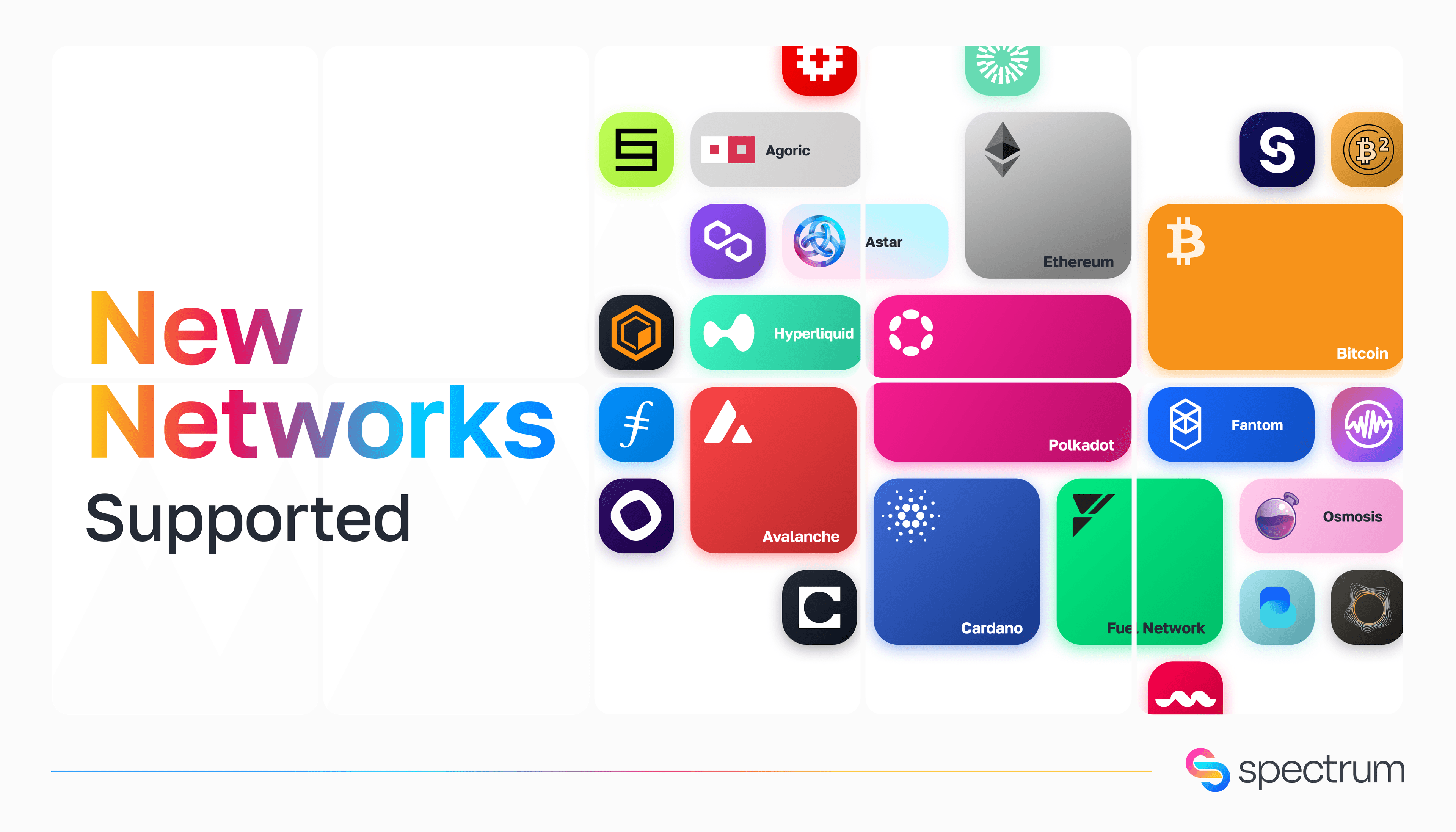
We are proud to announce that Spectrum has expanded its RPC platform with support for 21 additional blockchain networks. This update reflects where real developer activity is moving today, across high performance execution environments, payments focused chains, Bitcoin aligned ecosystems, AI native networks, and a growing set of application specific and layer 2 platforms.
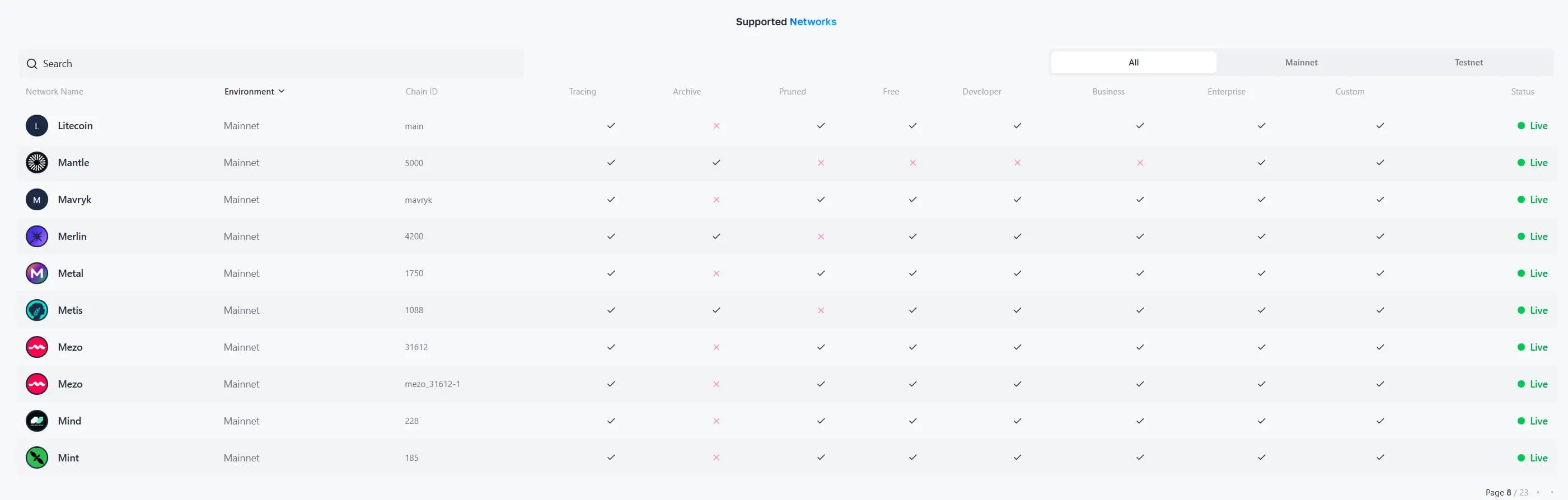
Rather than forcing teams to constantly rethink their infrastructure as their roadmap evolves, Spectrum aims to provide dependable access to the networks builders care about, using a consistent and production ready setup. We highly encourage you to explore these networks or start building when ready. You can view the full list of supported networks and access detailed information directly on the Spectrum Networks page.
Why broader network support matters
Very few products remain present on a single chain for long. A team might start with one network because it fits their initial use case, but more often than not, expansion usually follows. Payments move across rails. Liquidity fragments and reconnects. Applications experiment with new environments as performance, cost, or distribution needs change. Each new network introduces overhead, new endpoints to manage, new reliability assumptions, new monitoring and alerting requirements. Over time, this complexity truly becomes a tax on development speed and operational confidence.
By expanding network coverage within a single platform, Spectrum helps reduce that burden. Developers gain a consistent way to access very different ecosystems without stitching together multiple providers or maintaining custom setups for every chain they touch.
Furthermore, this latest expansion is also notable for its diversity. It includes networks optimised for speed, chains focused on real world finance, Bitcoin adjacent designs that explore new security models, and projects experimenting with AI and data coordination. Together, they reflect how the blockchain landscape is evolving beyond one size fits all platforms.
A closer look at the newly supported networks
Rather than presenting a flat list, it is helpful to look at these additions through the lens of the problems they are designed to solve. Many of these networks overlap conceptually, but clear themes emerge.
High performance and execution focused networks
Some networks prioritise raw throughput, low latency, and execution efficiency. These environments are often chosen when user experience is critical and applications need to feel responsive even under heavy load.
Monad is built with this goal in mind. It focuses on high speed execution and aims to support applications that demand consistent performance at scale. For teams building consumer facing products, trading tools, or real time systems, this focus is increasingly important.
Solana has become one of the most widely used networks in this category. Its fast block times and large ecosystem make it a common choice for applications that need to handle large volumes of activity without sacrificing usability.
Mode also leans toward performance, particularly in the context of DeFi and automated onchain activity. It reflects ongoing experimentation around how execution environments can better support dynamic applications.
Morph takes a more specialised approach, focusing on settlement and value transfer. While not a general purpose execution layer, its design speaks to a broader trend toward chains optimised for specific workloads.
Payments and financial infrastructure oriented networks
Another clear theme in this expansion is the continued importance of blockchains designed for payments, asset issuance, and financial workflows.
Stellar remains one of the most recognisable names in this space. Its long standing focus on cross border value transfer and tokenised assets has made it a frequent choice for financial applications.
XDC Network is often discussed in the context of trade finance and real world asset (RWAs) tokenisation. It aims to bridge enterprise requirements with public blockchain infrastructure, which appeals to teams working in regulated environments.
Coreum positions itself around programmable assets and financial market infrastructure. Its design reflects the needs of institutions that value predictability and clearly defined behaviour.
Provenance Blockchain takes a similar approach, focusing on infrastructure that aligns with compliance driven use cases and traditional financial workflows.
Together, these networks highlight how blockchain adoption continues to move closer to real world finance, rather than existing purely as experimental technology.
Bitcoin aligned and Bitcoin adjacent ecosystems
Bitcoin remains the most secure and widely recognised blockchain, but its limited programmability has inspired a growing ecosystem of projects exploring how to extend its capabilities without abandoning its core principles.
Botanix aims to bring EVM style smart contract functionality into a Bitcoin anchored context. It is part of a broader effort to expand what can be built around Bitcoin while retaining its security assumptions.
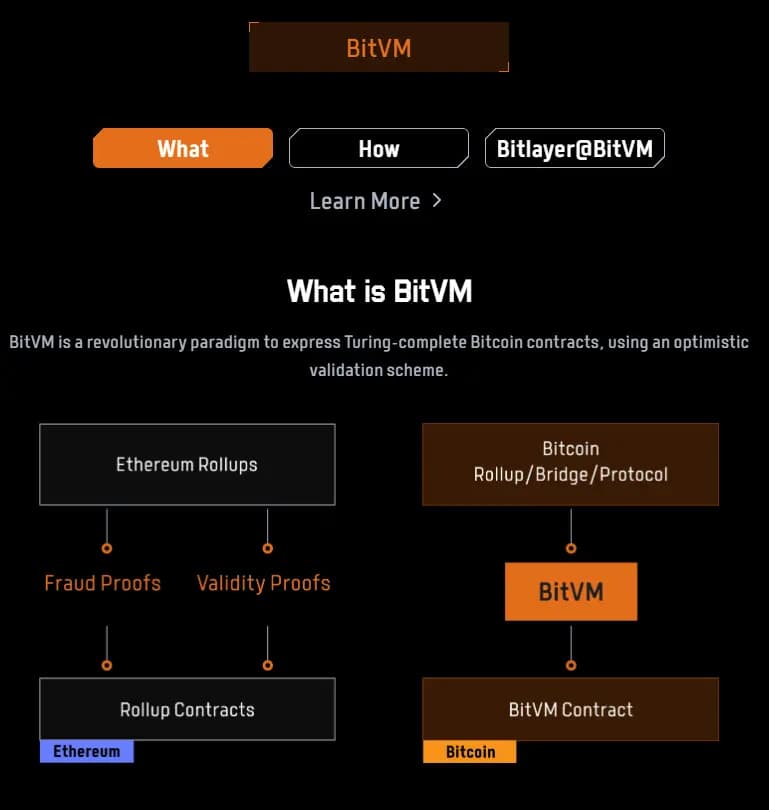
Bitlayer explores alternative approaches to Bitcoin programmability, including BitVM inspired designs. These projects appeal to builders who want to remain closely aligned with Bitcoin while experimenting with richer application logic.
AI, data, and specialised computation networks
A growing number of networks are exploring how blockchains can coordinate computation, data, and incentives beyond traditional financial use cases.
Bittensor is one of the most distinctive examples. It introduces a marketplace for machine intelligence, where participants are economically rewarded for contributing useful models and outputs.
Mind Network focuses on privacy preserving computation, including advanced encryption techniques. It targets applications where data confidentiality is a primary concern rather than an afterthought.
Codex addresses a different layer of the stack, focusing on durable data storage. While not every application requires decentralised storage primitives, many systems rely on them as a complement to execution layers.
Kite combines themes around AI, payments, identity, and autonomous agents. It reflects growing interest in agent driven commerce and automated economic systems.
These networks show how blockchain infrastructure is increasingly being applied to coordination problems well beyond simple value transfer.
Layer 2 networks, app chains, and ecosystem extensions
Finally, several additions fall into a broad category of scaling solutions, app specific chains, and ecosystem extensions. These networks often prioritise composability, distribution, or alignment with specific developer communities.
Polygon Katana is positioned as a DeFi focused environment, designed to align liquidity, applications, and incentives within the Polygon ecosystem.
Unichain is backed by Uniswap Labs and targets DeFi and liquidity intensive applications. It aims to provide an execution environment closely aligned with one of the most widely used DeFi protocols.
Superseed reflects continued experimentation within the Optimism style ecosystem, particularly around incentives and infrastructure for decentralised finance.
X Layer connects EVM compatibility with exchange adjacent distribution. This combination can be attractive for teams seeking access to liquidity and users alongside familiar tooling.
Neo X offers EVM compatibility within the Neo ecosystem, making it easier for developers to reuse existing skills while engaging with a different community.
ABCore represents a modular approach to network design, supporting multiple industry focused scenarios rather than a single monolithic use case.
TAC focuses on bringing EVM applications into the TON and Telegram ecosystem, where distribution and user access play a central role.
What this expansion enables in practice
Taken together, these additions significantly expand the range of products that can be built using Spectrum as a single infrastructure layer. Teams can prototype on new networks without committing to bespoke setups, while applications can support multiple environments with fewer operational risks. Experiments that once felt expensive or time consuming now may become easier to justify.
For payments and fintech products, networks like Stellar, Morph, XDC, Coreum, and Provenance offer different approaches to settlement and asset management. For high throughput consumer applications, Solana and Monad stand out. For DeFi builders, Unichain, Mode, Polygon Katana, and Superseed provide targeted environments. Additionally, for Bitcoin aligned experimentation, Botanix and Bitlayer open new paths. For AI and data driven systems, Bittensor, Mind, Codex, and Kite explore entirely new design spaces.
Getting started with Spectrum
If one or more of these networks is already part of your roadmap, getting started is straightforward. Developers can create a Spectrum account, explore the full list of supported networks, and generate RPC endpoints directly from the dashboard. Furthermore, integration fits neatly into existing workflows, whether you are connecting a backend service, a wallet, a bot, or an indexing pipeline. Endpoints can be dropped into familiar tooling without reworking your architecture, making it easy to test new environments or move toward production with confidence.
To explore all available networks and start building when ready, you can sign up by clicking here.
The goal is simple. Infrastructure should feel invisible. It should not slow teams down or force architectural compromises. It should support experimentation and scale without becoming a constant source of friction.
Looking ahead
Network support will continue to expand as new ecosystems mature, tooling improves, and developer demand shifts. This latest update is not a one off release, but part of an ongoing effort to ensure builders have reliable access to the networks they actually want to work with, whether they are experimenting early or operating in production.
As blockchain applications continue to diversify, infrastructure increasingly becomes a foundation rather than a differentiator. The goal is not to stand out through novelty, but to be consistently dependable, so teams can focus on product decisions instead of operational concerns. With this new wave of network support, Spectrum aims to stay firmly in that role, quietly enabling builders across a growing range of ecosystems.
If these networks are part of your plans for the year ahead, now is a good time to start exploring and building. For ongoing updates, deeper technical insights, and announcements as new networks are added, you can also visit the Spectrum blog and follow Spectrum Nodes on X to stay close to what is coming next.