
Spectrum Marketplace: Onchain APIs for Staking, Prices and NFTs
Updated October 22, 2026 · Spectrum Nodes
Short answer: Spectrum Marketplace is a storefront of plug and play APIs in the Spectrum Nodes dashboard that read onchain contracts and return plain JSON. It launched with nine contract APIs, covering staking rates for stETH, wstETH, rETH, weETH, cbETH and sUSDe, token prices on six chains, any ERC20 token or NFT collection and Safe wallets, plus Wallet Tracker. It is priced on usage, with no long term contract.
What Is Spectrum Marketplace?
A catalogue of micro services running on Spectrum node infrastructure. A micro service here is one small API that does one job, such as reading a staking rate. Each wraps a widely used onchain contract behind a standard REST API.
You call the API. Spectrum runs the nodes, the decoding, the caching and the upgrade handling underneath. It sits alongside Nodes, APIs, Webhooks and the upgrades Calendar in the dashboard, so it uses the same authentication and the same billing as the rest of the platform.
What Problem Does Spectrum Marketplace Solve?
Your integrations break when protocols change their ABIs. An ABI (application binary interface) is the description of a contract's functions and events that your code needs in order to call it. We maintain the verified ABI repository, so you don't. That covers three costs that never appear in a sprint estimate:
- Contract decoding. Every protocol stores its data differently. You find the right method, handle the right decimals and test against a live chain before you trust it.
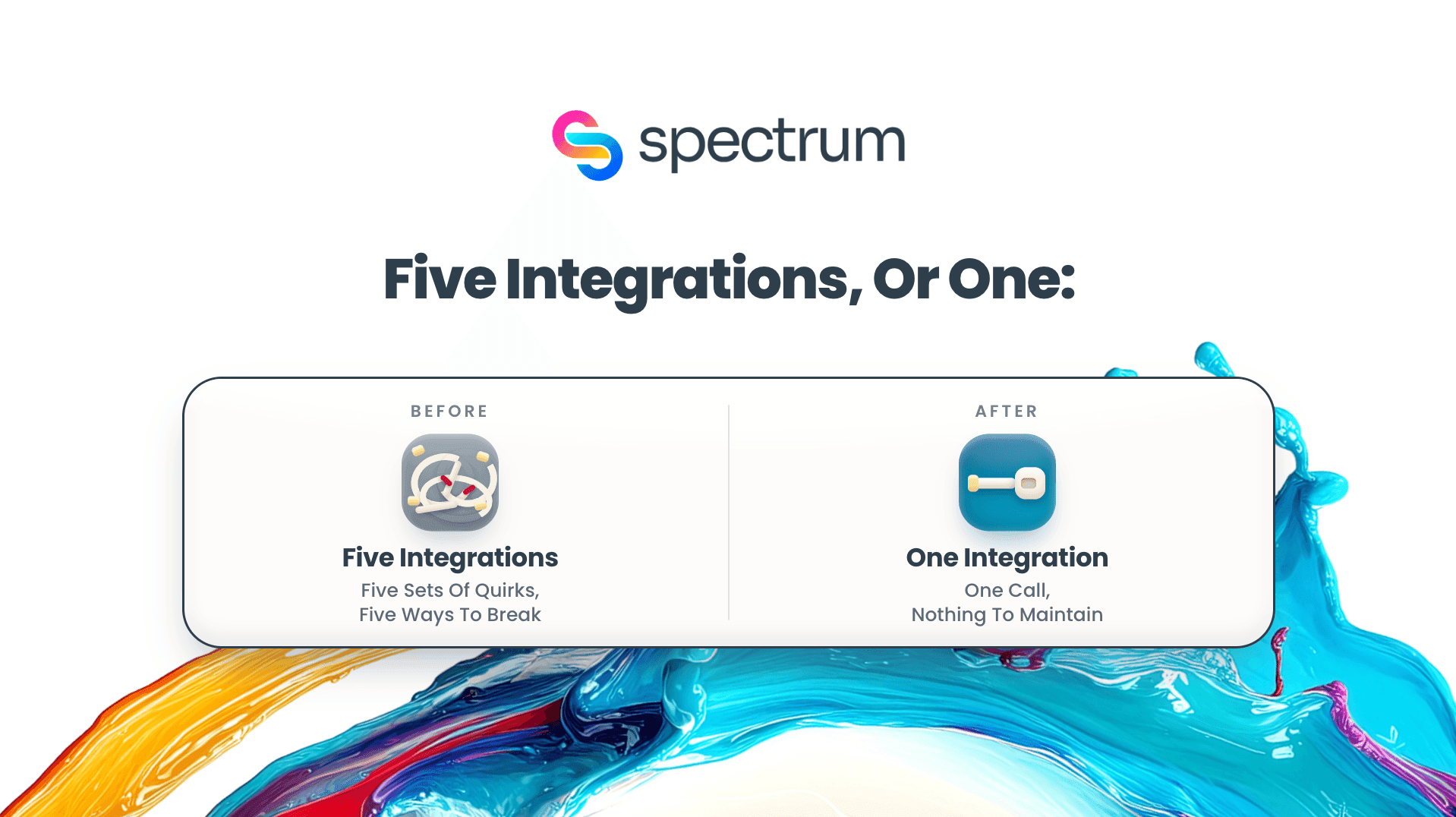
- Repetition. Supporting five liquid staking tokens is five integrations, each with its own quirks and each able to break on its own.
- Maintenance. A chain upgrades, a binary changes, and middleware that worked for eight months quietly returns something different. You hear about it from a user, not from your monitoring.
What APIs Are Available at Launch?
Nine contract APIs plus a wallet monitoring service.
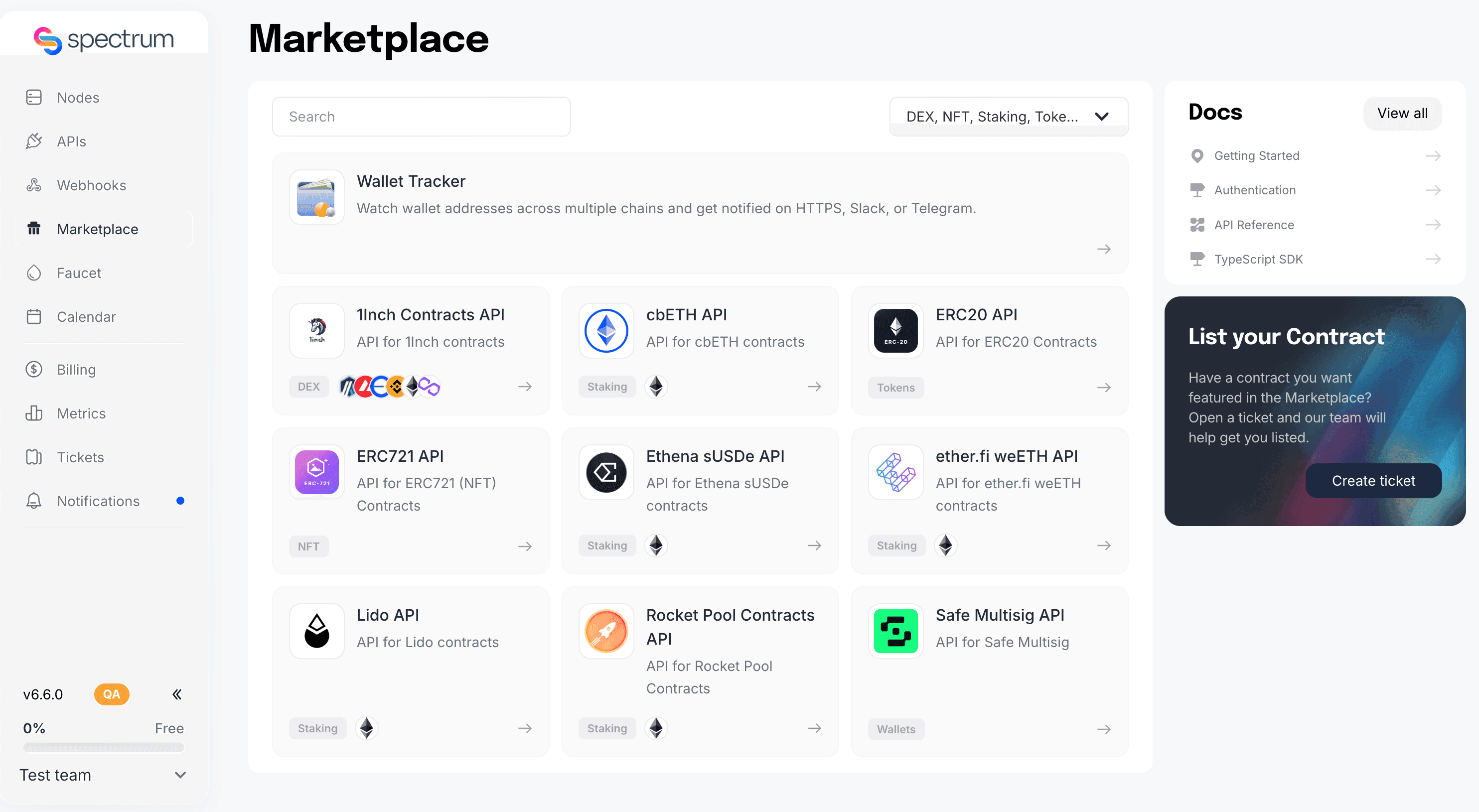
| Service | Category | What It Returns |
|---|---|---|
| Lido API | Staking | stETH and wstETH exchange rates and supply |
| Rocket Pool Contracts API | Staking | rETH exchange rate and supply |
| ether.fi weETH API | Staking | weETH exchange rate and supply |
| cbETH API | Staking | cbETH exchange rate and supply |
| Ethena sUSDe API | Staking | sUSDe exchange rate and supply |
| 1inch Contracts API | DEX | Token prices from the 1inch onchain oracle |
| ERC20 API | Tokens | Name, symbol, decimals, supply and balances for any ERC20 token |
| ERC721 API | NFT | Metadata, ownership, supply and artwork links for any NFT collection |
| Safe Multisig API | Wallets | Signers, approval thresholds and activity for any Safe wallet |
| Wallet Tracker | Wallets | Watches addresses across chains, notifies over HTTPS, Slack or Telegram |
Which Liquid Staking Tokens Are Supported?
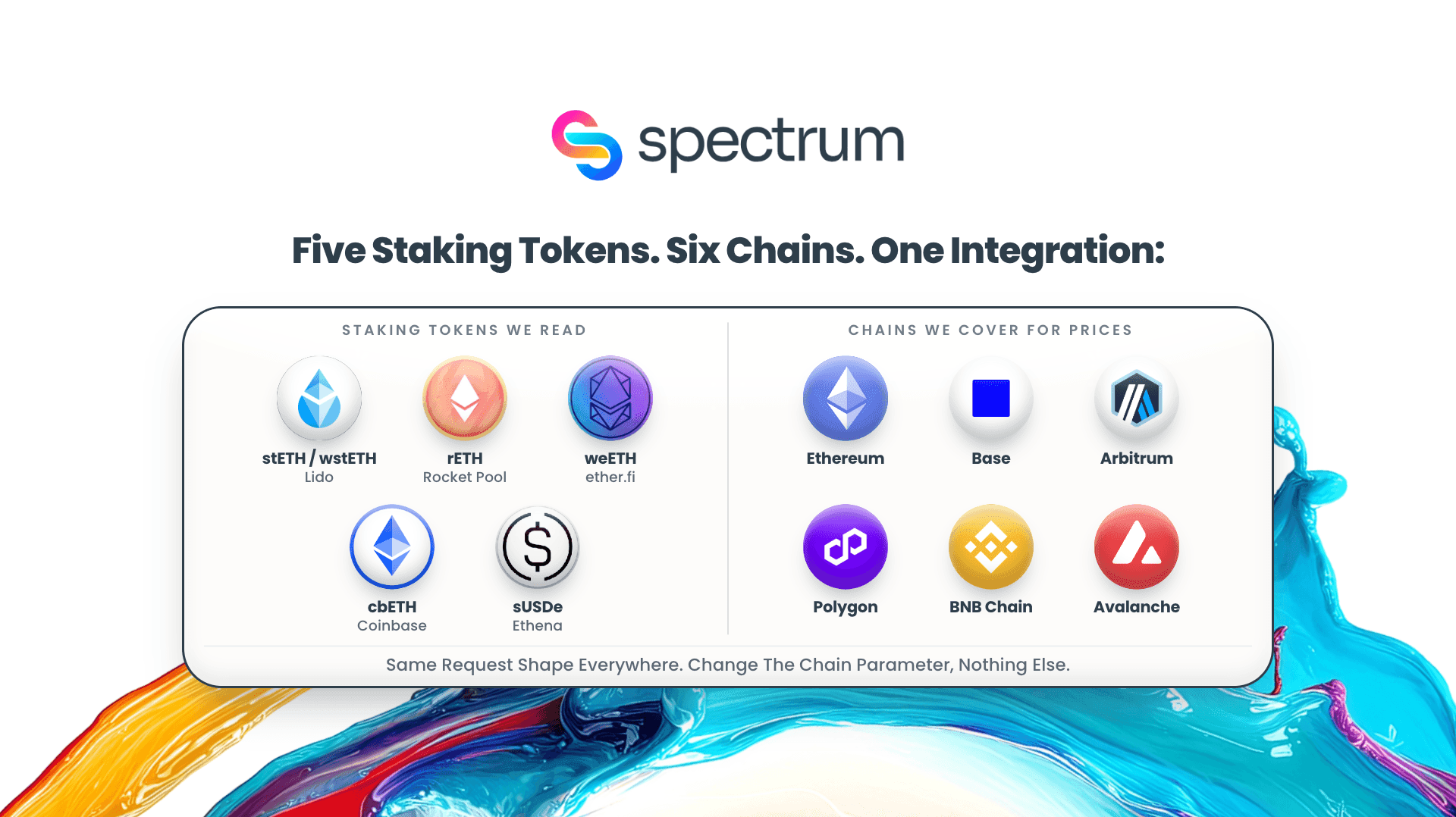
Staking rates across the major LSTs (liquid staking tokens, which represent staked assets you can still trade). Five, read from the contracts themselves, not a third party aggregator:
- stETH and wstETH, issued by Lido
- rETH, issued by Rocket Pool
- weETH, issued by ether.fi
- cbETH, issued by Coinbase
- sUSDe, issued by Ethena
One integration covers all five.
Which Chains Are Supported for Token Prices?
Six: Ethereum, Base, Arbitrum, Polygon, BNB Chain and Avalanche.
The request shape is identical on every chain. You change the chain parameter and nothing else in your code.
How Does Pricing Work?
You pay on consumption of the service. No long term contract, no seat count, no minimum commitment.
A prototype pays prototype money. Spend rises with usage, not ahead of it, which matters when you ship a feature you are not yet sure your users want.
What Happens When a Chain Upgrades?
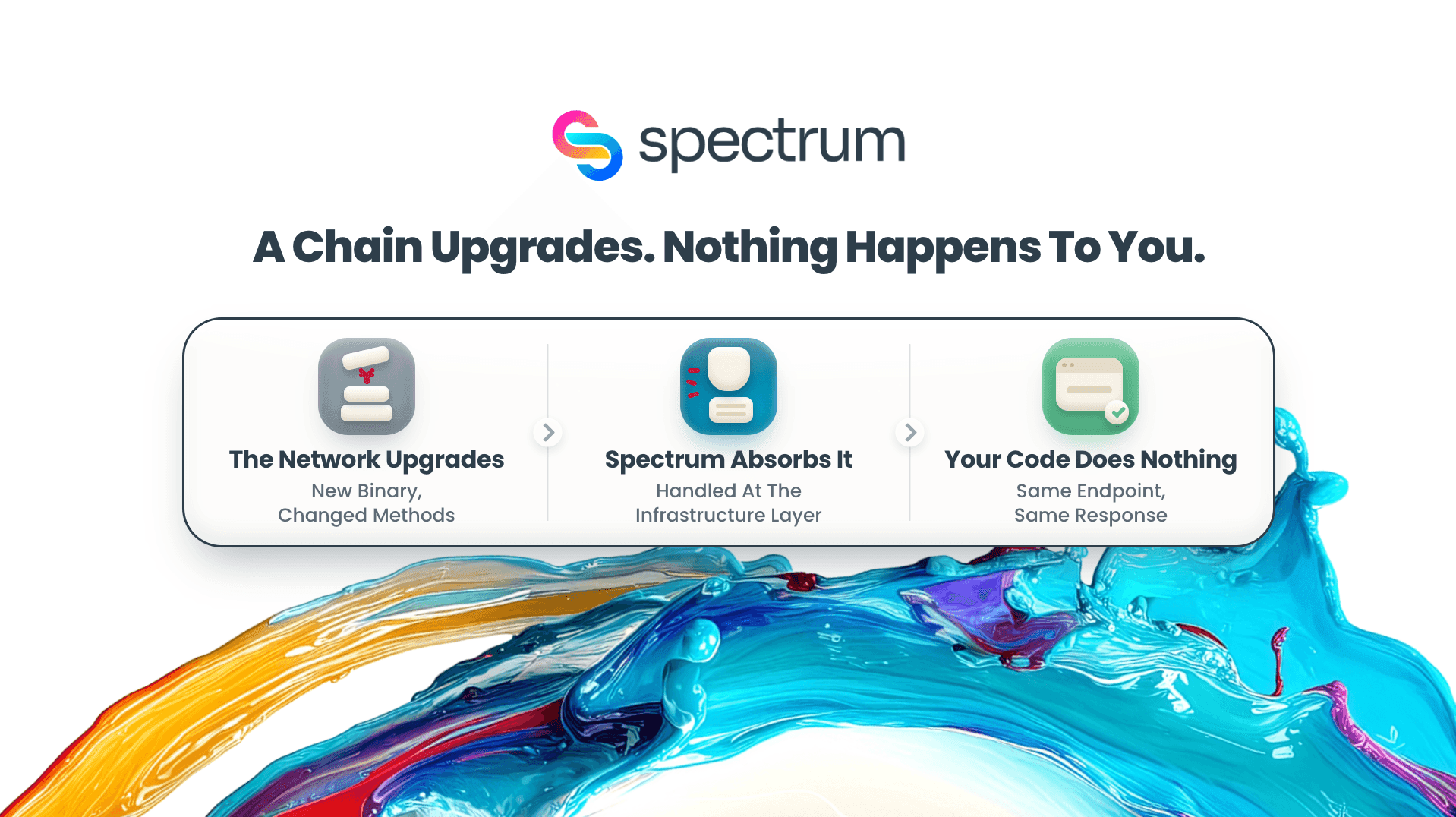
Spectrum absorbs it before it reaches you. Every Marketplace service runs on Spectrum node infrastructure, so upgrades are handled at the infrastructure layer and the endpoint you called last month behaves the same way this month.
Can You Try It Without Writing Code?
Yes. Every service page has a live request panel. Run a request in the browser and see the exact response shape before you commit anything to your codebase. The panel is read only.
How Do You List Your Own Contract?
Open a ticket from the dashboard and the Spectrum team will help get it listed. The Marketplace works in both directions: distribution for services other teams need, on infrastructure you don't have to operate. Prefer a call? Book one with the team.
FAQ
What is Spectrum Marketplace? A storefront of plug and play APIs that read onchain contracts and return plain JSON, running on Spectrum node infrastructure. You open it from the Spectrum dashboard.
Is there an API for stETH and other liquid staking exchange rates? Yes. Spectrum Marketplace returns exchange rates and supply for stETH and wstETH (Lido), rETH (Rocket Pool), weETH (ether.fi), cbETH and sUSDe (Ethena), read from the contracts themselves.
How much does Spectrum Marketplace cost? It is priced on consumption. You pay for the requests you make, with no contract and no minimum.
Do I need to run a node? No. Spectrum runs the node infrastructure behind every service, including upgrade handling.
Can I monitor a wallet address for activity? Yes. Wallet Tracker watches addresses across chains and notifies you over HTTPS, Slack or Telegram. For signed, reorg aware event delivery to your own backend, use Spectrum Webhooks.
Is there an SDK? Yes, a TypeScript SDK, alongside the REST API reference and full documentation. Prefer the terminal? The Spectrum CLI reads the same data.