
"AI Agents in Blockchain: What They Are and How They Work"
Updated October 22, 2026 · Spectrum Nodes
Short answer: AI agents in blockchain are autonomous programs that read onchain data, decide what to do and act through smart contracts without a person approving each step. Every action runs through RPC endpoints and APIs connected to blockchain nodes, so an agent is only as reliable as that infrastructure. Spectrum Nodes covers that layer on 200+ chains, plus a CLI with a machine readable command catalog for agents.
AI agents in blockchain systems are one of the most important technological shifts in Web3. For years, blockchains relied on human users and basic automation scripts to drive activity. Now a new class of autonomous software analyses onchain data, makes decisions and executes actions on its own.
Blockchains offer something most digital systems don't: a transparent, programmable environment where autonomous actors interact through smart contracts and shared infrastructure. As AI gets more capable, that makes blockchains attractive to AI systems that need reliable, verifiable execution layers.
What Are AI Agents?
AI agents are autonomous software systems that perceive information, reason about it and take actions to reach a specific goal. Unlike traditional automation tools that follow fixed instructions, they adapt their behaviour to new data and changing environments.
Researchers call this agentic AI: systems that plan tasks and carry out multi step actions on their own. Institutions such as the Stanford University Human-Centered Artificial Intelligence (HAI) institute are researching agentic AI and how intelligent agents can coordinate complex digital workflows.

In practice, an AI agent performs three functions:
- It observes its environment.
- It processes the available information.
- It chooses an action that moves it closer to its goal.
How Is an AI Agent Different From a Bot?
An AI agent adapts to context, while a traditional bot follows strict rules.
| Traditional bot | AI agent | |
|---|---|---|
| Logic | Fixed rule sets | Analyses context and weighs options |
| When conditions change | Behaves the same until someone edits the rules | Modifies its behaviour |
| Tools | Usually one task | Can work with several tools and platforms |
IBM's overview of AI agents is a good next read: it explains how these systems increasingly interact with multiple tools and platforms at once.
Early examples already exist. Some agents act as trading assistants that analyse markets and execute strategies automatically. Others are AI copilots that help developers write and debug code, or monitoring agents that oversee infrastructure and respond to performance issues.
Agents that work in decentralised environments must reliably retrieve onchain data and trigger transactions. If the infrastructure underneath isn't robust, they struggle to get accurate chain data or to execute consistently.
Why Are AI Agents Growing So Fast?

AI agents are growing fast because of recent progress in large language models (LLMs), models trained on large amounts of text to understand and produce language, and in generative AI. These systems have greatly improved how well machines understand instructions, process complex information and coordinate sequences of actions.
Earlier software needed constant human supervision. Today, AI systems interpret goals, analyse data and execute multi step workflows on their own. Ongoing AI research pushes this further, with models trained for extended reasoning and for calling external APIs, so agents can operate across different digital environments. Software is moving from passive tool to active participant.
What Can AI Agents Do on a Blockchain?
AI agents can interact directly with smart contracts and decentralised protocols. A smart contract is a program stored on a blockchain that runs automatically when its conditions are met, which makes blockchains a natural environment for intelligent agents.
Use cases include:
- Autonomous DeFi trading. Agents analyse market data, monitor liquidity pools and execute strategies across protocols by interacting with Ethereum smart contracts.
- Automated contract management. Agents monitor contract activity, detect anomalies and trigger updates or security responses when needed.
- DAO governance. Instead of each participant evaluating proposals by hand, agents could analyse the data and help coordinate voting in decentralised organisations.
- Liquidity tracking. An agent can follow DeFi liquidity moving across several decentralised applications and adjust trading strategies to match.
- NFT market analysis. Agents can spot emerging trends and manage digital asset portfolios automatically.
- Activity monitoring. By analysing transaction patterns, agents may detect suspicious behaviour or anomalies faster than traditional monitoring systems.
If you are building AI agents that interact with blockchains, check the supported chains to see which ecosystems Spectrum infrastructure covers.
Why Is Web3 a Good Fit for AI Agents?
Web3 suits autonomous software because blockchains never stop running and their data is public. Agents can analyse that data in real time and act on it through smart contracts that any program can call, with no human gatekeeper in between.
How Do AI Agents Interact With Blockchain Networks?
AI agents interact with blockchains through RPC endpoints and APIs that connect them to nodes. An RPC (Remote Procedure Call) endpoint is the URL an application sends requests to so a node can answer them. A typical loop:
- The agent queries blockchain data, such as account balances, smart contract state or transaction history.
- It processes that information with its AI model and decides what to do.
- It submits a transaction back to the chain.
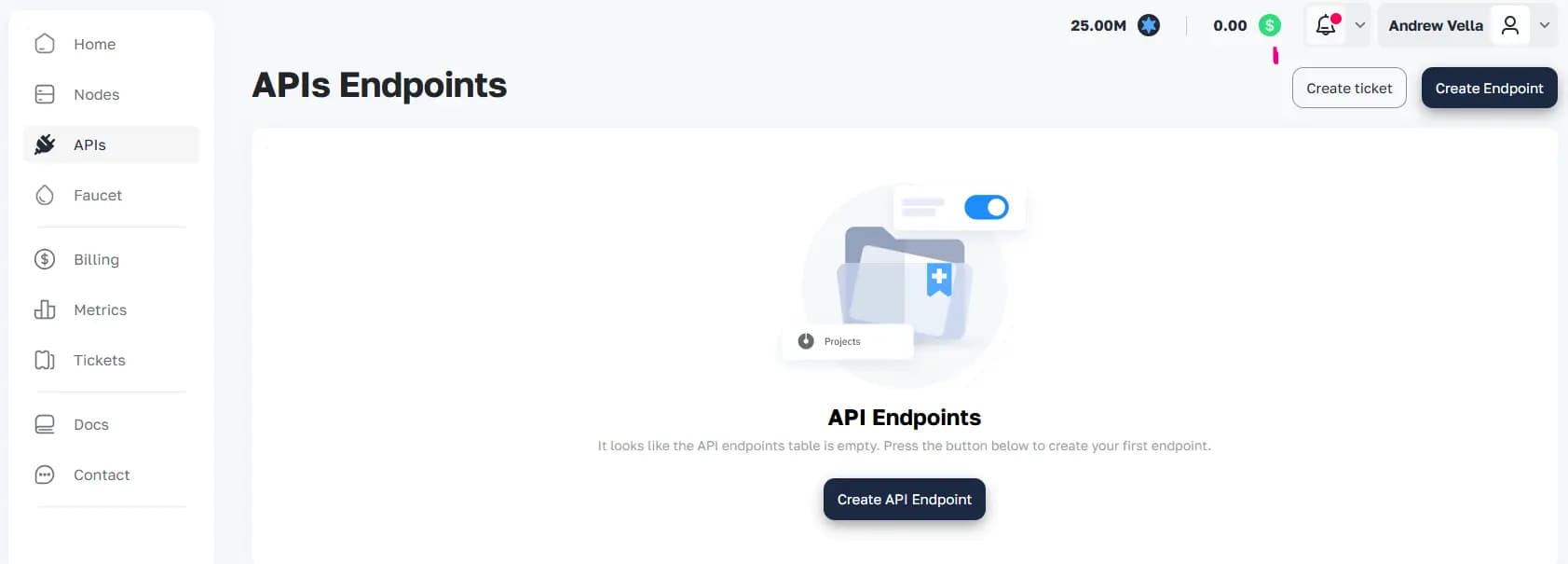
As the number of agents grows, infrastructure providers have to handle large volumes of incoming requests. That takes request routing, load balancing and redundancy. To see how infrastructure distributes this traffic, read how Spectrum handles requests.
Can an AI Agent Like Claude Read Ethereum Through a CLI?
Yes. A command line interface (CLI) gives any agent that can run shell commands, such as Claude in a terminal, direct access to chain data. The Spectrum CLI is built for AI agents:
- 96 commands across 24 chains, covering EVM chains such as Ethereum, plus Solana, Bitcoin, Cosmos and Starknet
- A machine readable command catalog with full JSON Schema, so the agent can see every command and its inputs
- JSON output by default, so results go straight back into the agent
- It reads data and builds unsigned transactions, and never signs or sends, so your keys stay with you
Install it with npm install -g @spectrumnodes/cli. It runs on a Spectrum endpoint. Read more in the Spectrum CLI launch post.
Why Does AI Agent Infrastructure Matter?
Infrastructure matters because every decision an agent makes depends on fresh chain data and a working path to submit transactions. As agents become more common, the load they put on blockchain infrastructure is likely to grow sharply.
Each decision often means querying blockchain data, verifying the chain state and submitting transactions, all through RPC endpoints connected to nodes. Nodes maintain the ledger, validate transactions and serve the data applications depend on. If node infrastructure becomes unreliable, automated agents cannot function correctly.
That makes scalable infrastructure a requirement. Systems built on high performance RPC infrastructure and designed for resilience, such as the architecture described in how Spectrum scales infrastructure, are what large scale autonomous activity needs.
What Is the Future of AI Agents in Blockchain?
The meeting of AI and blockchain infrastructure is still early, but three directions are emerging:
- Autonomous economic agents that manage digital assets, execute financial strategies and take part in decentralised markets on their own
- AI assisted governance in decentralised organisations, where agents help analyse proposals and coordinate decisions
- Decentralised AI services, where blockchains provide transparency, coordination and verification layers for machine learning systems
Studies on the future of autonomous AI systems suggest these technologies could reshape digital economies.
As this develops, reliable infrastructure becomes essential: scalable nodes, resilient RPC endpoints and efficient request routing will carry the activity agents generate. To keep up with the latest on blockchain infrastructure, follow @SpectrumNodes on X.
FAQ
What are AI agents in blockchain? AI agents in blockchain are autonomous programs that read onchain data, make decisions and act through smart contracts without human approval for each step. Examples include DeFi trading agents, contract monitors and governance assistants.
How do AI agents interact with blockchain networks? They connect to blockchain nodes through RPC endpoints and APIs. The agent queries data such as balances or contract state, decides with its AI model and submits a transaction back to the chain.
What is the difference between an AI agent and a trading bot? A traditional trading bot follows fixed rules, while an AI agent analyses context and changes its behaviour as conditions change. Both need constant, reliable access to blockchain data.
Is there an Ethereum RPC CLI for Claude? Yes. The Spectrum CLI works with any AI agent that can run shell commands, including Claude in a terminal. It offers 96 commands across 24 chains with a machine readable JSON Schema catalog, and it never signs or sends transactions.
What RPC do AI agents need? AI agents need RPC that keeps latency steady under bursty load, with rate limits that fit high request volumes and failover when a node has problems. Spectrum Nodes runs RPC on 200+ chains at 99.999% uptime.