
5 RPC Metrics That Matter When Choosing an RPC Provider
Updated October 22, 2026 · Spectrum Nodes
Short answer: the five RPC metrics that matter when choosing an RPC provider are latency (median and p95), throughput, uptime, security and scalability. Measure each on your own calls. Spectrum Nodes serves over a billion requests a day at 99.999% uptime, and in a 14 day test Spectrum's Boosted Nodes returned BSC block traces (debug_traceBlockByNumber) at 237 ms p95 against 2,182 ms on Alchemy.
These five metrics show whether your application will grow smoothly or stall under pressure. Spectrum Nodes, built and run by Simply Labs (formerly Simply Staking), is designed around them.
What Is RPC Latency, and Why Does p95 Matter?
Latency is the delay between sending a request and receiving the full reply. The p95 figure shows how your slowest calls behave, which is where users feel it.
Measure latency as percentiles, not only as an average. The median (p50) is the time half of your requests beat. The p95 is the time 95% beat, and p99 goes further into the tail. Under high load, an average can look fine while the tail stalls your app.
The tail can differ far more than the median. In our test from September 29 to October 14, 2026, BSC block traces (debug_traceBlockByNumber) took 82 ms at the median on Spectrum's Boosted Nodes against 707 ms on Alchemy, and 237 ms against 2,182 ms at p95. Test the heavy calls your app makes, not only eth_getBalance. For how Spectrum handles latency at scale, read Spectrum Under the Hood.
Small differences decide whether a trade clears on time. Good providers track latency in milliseconds with tools such as OpenTelemetry. Spectrum cuts latency with regional RPC and WebSocket endpoints, so servers sit closer to your users.
How Do You Measure RPC Throughput?
Throughput is how many requests an RPC server processes in a given interval. Measure it at your expected peak, not your average, because that is when a weak provider starts to queue or throttle.
A good RPC setup records throughput with tags such as hostname and session ID, so you can see which workloads create pressure.
We process over a billion requests a day on our own racks and hardware in Tier III data centers in the US and Europe, plus a bare metal deployment in Singapore, and spread workloads across servers so request queues stay short.
What Uptime Should an RPC Provider Deliver?
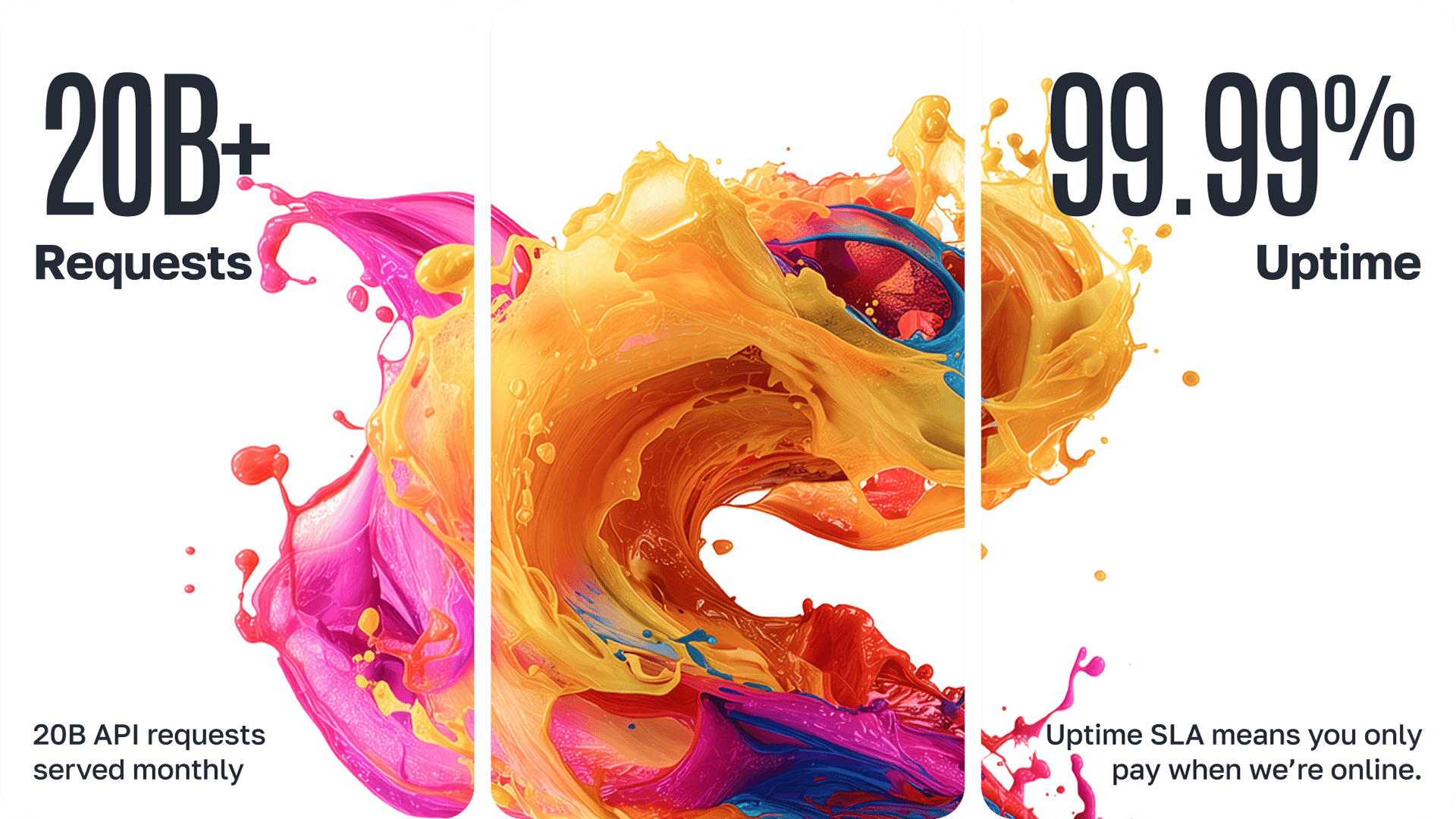
For production, at least 99.9%. Each extra nine cuts allowed downtime by a factor of ten, so 99.999% allows one hundredth of the downtime that 99.9% does.
Back uptime with monitoring: report processing time and resource check latency show whether nodes stay responsive under load.
Spectrum delivers 99.999% uptime across over a billion requests a day. It applies the operational standards Simply Staking built running validator infrastructure on chains such as Ethereum, where the team runs 7,600+ validators with no slashing events. Automatic failover and continuous monitoring keep RPC servers available. For what an outage does to your app, see what happens when an RPC goes down.
Which Security Metrics Should You Check?
Check the provider's attestation, its breach record and the access controls you get on each endpoint.
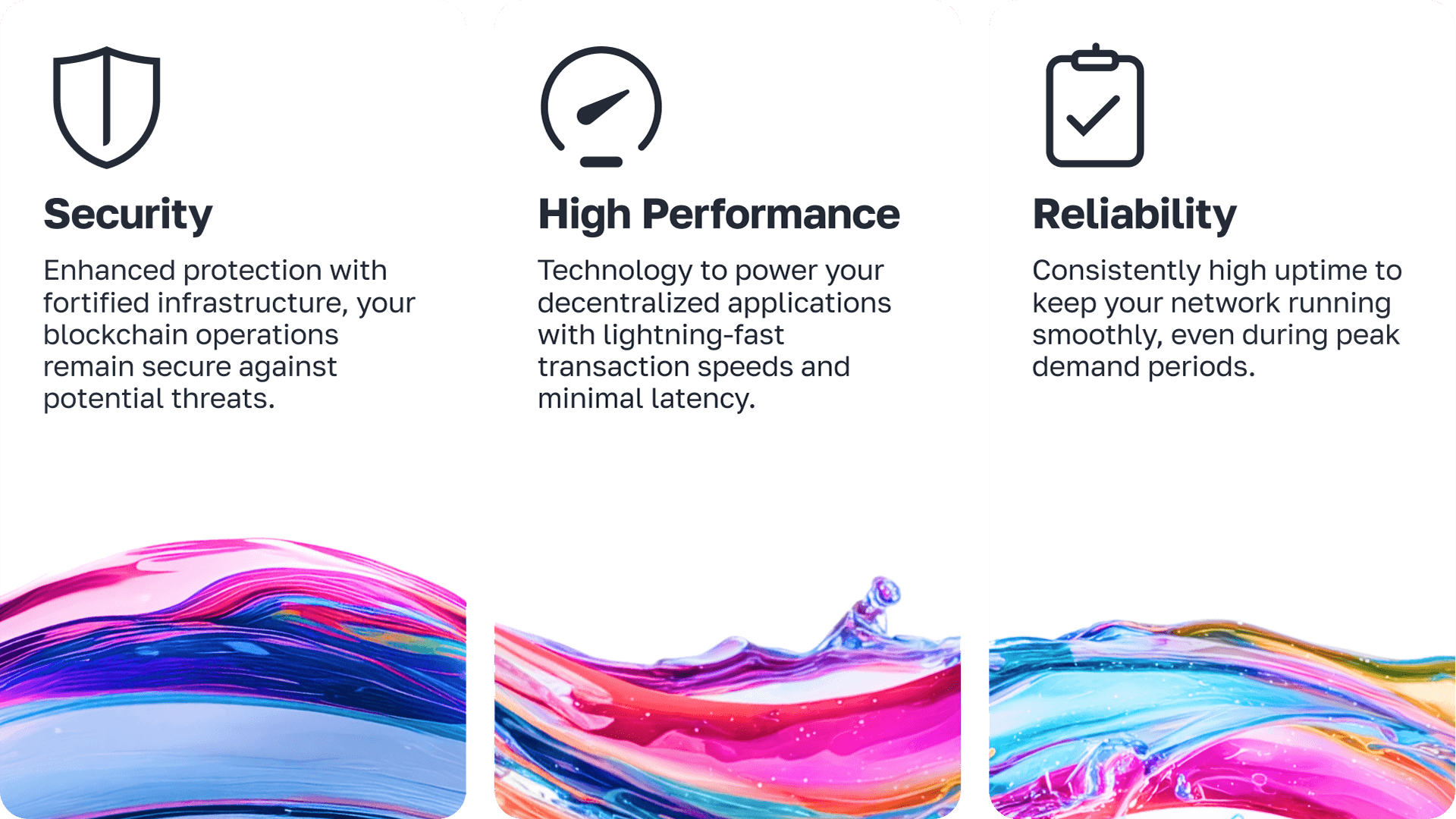
SOC 2 Type II is an independent audit of how a provider's security controls work over a period of time. Spectrum is SOC 2 Type II attested and has never had a breach.
Logs should carry tags such as hostname and port, so you can trace unauthorised access attempts. Spectrum gives you IP allowlists and CORS domain restrictions to control who reaches your endpoints, which stops misuse and keeps bandwidth for your own clients.
How Do You Judge RPC Scalability?
Ask whether the provider keeps latency and throughput steady as your traffic grows, and whether you can watch it happen.
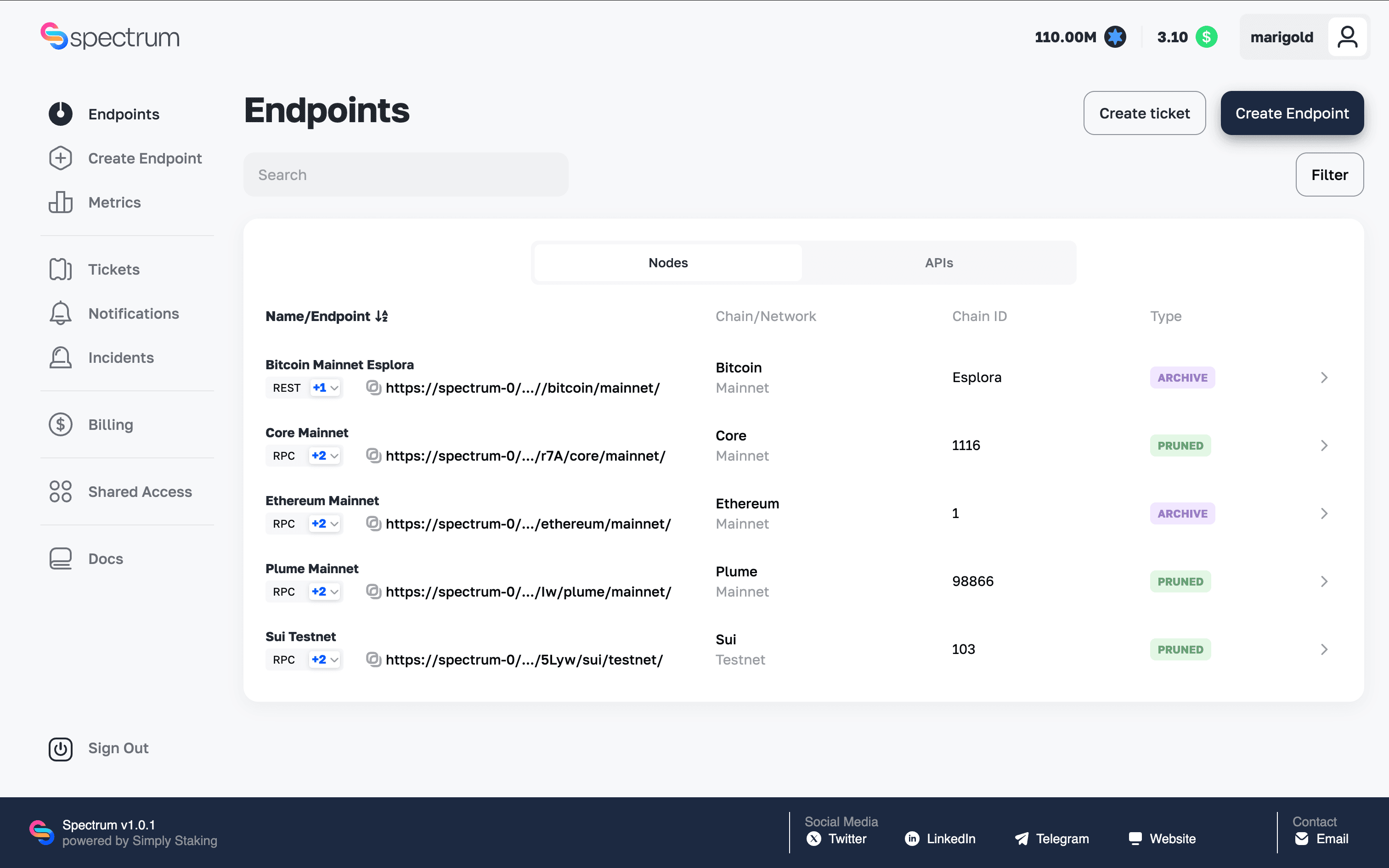
You need visibility into latency percentiles, request throughput and report processing times. Spectrum provides dashboards, analytics and role based permissions so teams can track RPC metrics across projects. Startups can follow usage growth live, and enterprises can assign permissions across environments.
How Do You Compare RPC Providers on These Five Metrics?
Run the same checks against every provider on your shortlist, from your own region, with your own method mix.
| Metric | What to measure | What to ask the provider |
|---|---|---|
| Latency | p50 and p95 per method, from your region | Which methods and regions does your benchmark cover? |
| Throughput | Requests per second at your expected peak | Is the RPS limit a guarantee or a ceiling? |
| Uptime | Success rate and downtime over 30 days | What uptime do you deliver, and on which plans? |
| Security | Attestation, breach record, endpoint controls | Is your SOC 2 report Type I or Type II? |
| Scalability | Latency and errors as load rises | Which dashboards and permissions do teams get? |
For a provider by provider view, see our best RPC provider comparison.
How Does Spectrum Nodes Measure Up?
Spectrum Nodes publishes a number for each metric: over a billion requests a day, 99.999% uptime, SOC 2 Type II attested with no breach, and measured block trace latency against Alchemy. Sign up for Spectrum and test them on your own calls.
FAQ
What are RPC metrics and why are they important? RPC metrics such as latency, throughput and uptime measure how an RPC provider performs under your workload. They expose bottlenecks before your users find them and let you compare providers on numbers instead of claims.
How do you measure RPC latency? Track latency in milliseconds as percentiles, usually p50, p75, p90 and p95, for both client and server side calls. Test from your own region with the methods your app sends most.
What does p95 latency mean? p95 is the time within which 95% of requests finish; the slowest 5% take longer. For BSC block traces, Spectrum's Boosted Nodes measured 237 ms at p95 against 2,182 ms on Alchemy (September 29 to October 14, 2026).
Is Spectrum a reliable service? Yes. Spectrum Nodes serves over a billion requests a day at 99.999% uptime, is SOC 2 Type II attested and has never had a breach. It runs on our own racks and hardware in Tier III data centers.
What uptime should an RPC provider have? For production, at least 99.9%. Each extra nine cuts allowed downtime by a factor of ten, so 99.999% allows one hundredth of the downtime of 99.9%. Ask which plans the uptime figure applies to.