
What Is Tempo Network? Stripe’s Stablecoin Payments Blockchain
Stablecoins have solved the money problem, but they have not yet solved the payments problem, and no, it is not because of speed.
Put yourself in the shoes of a merchant who is new to cryptocurrency. Stablecoins may move value quickly, but actually using them can feel like an operational mess. Confusing fee mechanics, extra gas tokens, and settlement that does not always feel final when it needs to be. For everyday payments and everyday users, that friction matters.
Well, all of this may be a thing of the past. Tempo Network is designed to remove that friction by putting stablecoins at the centre of the system. Fees are paid directly in stablecoins, transactions settle in roughly half a second, and once a payment is final, it stays final. The goal is simple. Make stablecoin payments feel predictable, reliable, and boring in the way good infrastructure should.
In this article, we break down what Tempo Network is, why Stripe is involved, how the Tempo blockchain works, and why it is being taken seriously as a stablecoin payments network.
Introduction
It is no secret that traditional payments today are slow, fragmented, and also very expensive once you cross borders. The main reason for this friction is that banks move money in batches while at the same time, card networks add layers of fees and intermediaries. Stablecoins improved the money itself by making value digital, global, and programmable. However, most stablecoins still run on blockchains that were not designed with payments as the primary use case , and as a result, many of the old frictions resurface at the infrastructure level, even when the asset being transferred is modern.
Tempo Network is designed to fix the infrastructure layer. Essentially, it is a payments blockchain built specifically for stablecoin settlement, with predictable fees, fast finality, and features that fintechs and enterprises actually need.
If you want a quick refresher on how stablecoins work before going deeper in Tempo, Simply Staking recently published a beginner friendly explainer that you may find here on stablecoin infrastructure that pairs well with this article.
What Is Tempo Network?
Tempo Network is designed as a stablecoin payments infrastructure, rather than a general purpose blockchain that later tries to support payments. Fundamentally, it is a purpose built Layer-1 blockchain designed as a stablecoin settlement layer for fintechs, businesses, and payment applications. Unlike most other blockchains, the Tempo blockchain is not optimised for trading, speculation, or complex DeFi strategies, but it is specifically optimised for moving stablecoins reliably at scale. That makes it a stablecoin payments network first, rather than a general purpose chain trying to support payments as an afterthought.
As part of its techstack, the Tempo Network is EVM (Ethereum Virtual Machine) compatible, which basically means that developers familiar with Ethereum tools can build on it without learning an entirely new environment. Under the hood, however, Tempo changes some core assumptions to better support payments.
At this stage it is important to note that none of this works without reliable blockchain infrastructure underneath. For a payments focused network like Tempo, uptime, performance, and predictable access to nodes are just as important as the protocol itself. If applications cannot reliably submit transactions or read state, even the best payments design breaks down.
Why Is Stripe Building a Blockchain?
By now you are probably asking yourself an important question: Why and what is Stripe building in crypto, and why now? First of all, one should note that Stripe is already processing trillions of dollars in payments each year, and because of that scale, Stripe sees and experiences first hand where traditional payment rails struggle, especially across borders. Stablecoins solve many of those problems by offering faster settlement and lower costs, but using stablecoins at scale requires infrastructure that feels enterprise grade, not experimental.
Therefore, the Tempo Network was incubated by Stripe alongside Paradigm. The idea is not that Stripe is launching a consumer crypto product, but it is that Stripe needs reliable onchain payment rails that match the operational realities of global payments. From that perspective, Tempo is not a hobby blockchain. It is an attempt to build a stripe blockchain optimised for stablecoin payments from day one.
How Tempo Network Works
Tempo Network rethinks how a payments blockchain should behave.
No Separate Gas Token
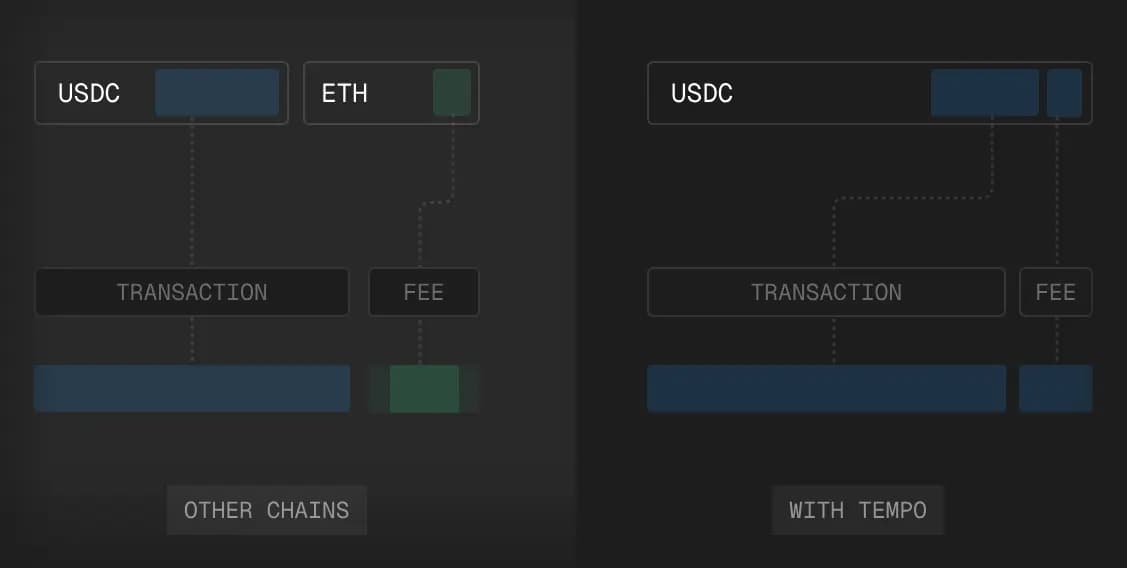
To understand why Tempo is different, it helps to look at how the Tempo blockchain works at a structural level. First of all, it is a Layer-1 blockchain designed specifically for stablecoin settlement. Unlike traditional blockchains, it does not rely on a separate gas token. Instead, transaction fees are paid directly in supported stablecoins, using the same asset that is being transferred. Additionally, users have the opportunity to choose which stablecoin they want to use for fees. Behind the scenes, the protocol handles any required conversions so validators can still receive fees in their preferred stablecoin. For users and businesses, this removes an entire layer of friction as there is no need to acquire, manage, or account for an extra token just to make a payment.
Fast and Deterministic Finality
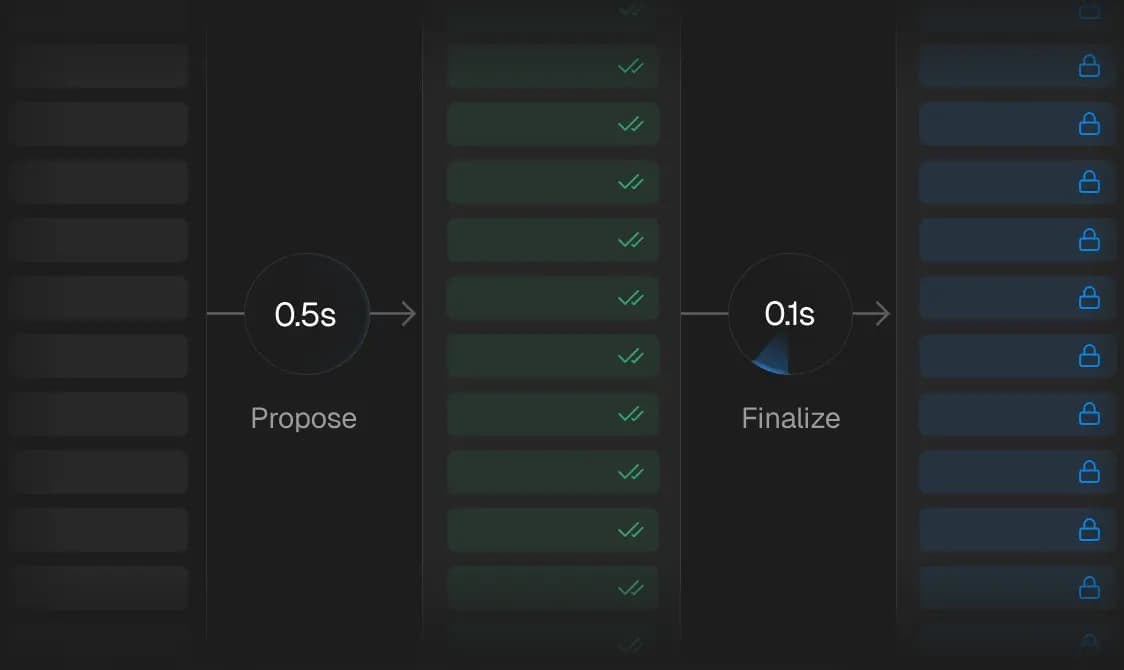
The second key feature to discuss is how Tempo Network handles transaction finality (a technical term that basically refers to the moment when a payment is truly complete and cannot be undone). On many blockchains, a transaction can appear confirmed but still be reversed or reorganised later. Although that uncertainty is manageable for trading, it creates real problems for payments, as a merchant needs to know, with absolute confidence, that once a customer pays, the payment is settled and cannot be reverted.
Tempo Network is designed to provide fast and deterministic finality, which means that transactions typically settle in around half a second, and once they are final, they stay final. For applications, achieving this in practice depends not just on the protocol, but also on having reliable, high performance RPC access to the network. For payments, this means certainty. When the payment goes through, both sides can move on immediately confident that the transaction has been truly settled.
Payment Focused Features
The third and final point to discuss within this section are the payment focused features at Tempo’s protocol level. Let’s have a quick overview of the most important ones.
TIP-20: Tempo uses a token standard designed specifically for stablecoin payments called TIP-20. In addition to sending value, it also allows payments to include useful information such as invoice numbers, payroll references, or internal tracking notes, which in turn make stablecoin transfers easier to reconcile and manage, especially for businesses and fintechs. Furthermore, TIP-20 can also support optional features like automated rewards or cashback, which makes it possible to build loyalty style payment experiences directly into stablecoin transfers.
TIP-403: Tempo also includes a protocol feature called TIP 403, which focuses on control and compliance. In simple terms, it allows stablecoin issuers to define basic transfer rules directly at the network level. These rules can include things like allowing transfers only between approved addresses or blocking transfers when required. For most users, this happens quietly in the background, but for issuers and regulated businesses, it provides a way to meet compliance requirements without building custom systems on top of the blockchain.
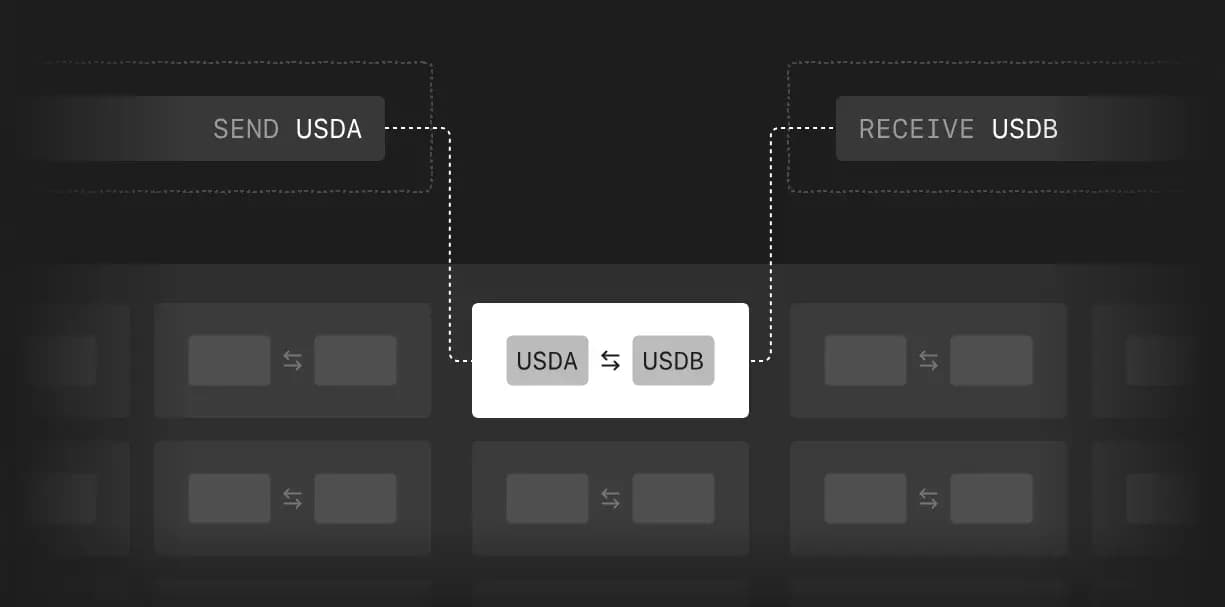
Stablecoin DEX: Tempo includes a built in exchange designed specifically for trading between stablecoins of the same underlying asset, for example USDC to USDT. This makes it possible to swap from one stablecoin to another directly on the network, without relying on external protocols or complex routing. For businesses, this simplifies everyday tasks like managing balances in different currencies or settling payments across regions. Stablecoin swaps become a native part of the payment flow rather than a separate step.
Parallel Transactions: Considering that Tempo is designed to handle large volumes of payments efficiently, instead of forcing transactions to wait in a single queue, the network allows multiple payments to be processed in parallel. For businesses sending payroll, payouts, or batch payments, this means hundreds or thousands of transfers can move at once, without each payment blocking the next. In high volume payment scenarios such as this, reliability becomes critical. If RPC access is unstable or goes down, payment queues, retries, and failures quickly compound, which is why infrastructure resilience matters as much as throughput.
Furthermore,Tempo also supports fee sponsorship, which allows applications to cover transaction fees on behalf of their users. In practice, this means that someone can make a payment without needing to manage fees or hold extra tokens. For non crypto users, the experience feels much closer to using a familiar payment app, where fees are handled in the background rather than exposed at every step.
Taken together, these design choices make it clear what Tempo is built for. The network prioritises predictable fees, fast settlement, and high volume transfers, all of which are essential for real world payments. Speculative activity is possible, but payments are the default behaviour the system is optimised around.
Tempo vs Ethereum, Solana, and Other Chains
To understand Tempo Network, it helps to compare it to existing blockchains. Compared to Ethereum, Tempo is far more specialised. Ethereum is a general purpose platform that supports everything from NFTs to DeFi. Furthermore, fees usually require a native asset, and finality is slower and less deterministic.
Other networks like Solana are designed to maximise speed and throughput, which works well for trading and high frequency activity, but Tempo takes a different approach. It focuses on payment operations, where predictable fees, stablecoin based transactions, and clear settlement matter more than raw transaction volume. These choices reflect the needs of fintech and payment workflows rather than market activity.
Use Cases
Because Tempo Network is built as a stablecoin payments network, its use cases are straightforward. Businesses can run payroll and payouts at scale without transactions queuing behind each other while merchants benefit from fast, final settlement that feels closer to tapping a card than waiting for confirmations. Furthermore, for teams building a USDC payments blockchain use case, predictable fees and fast finality are far more important than raw throughput.
Additionally, global remittances and B2B settlement are simplified through built in stablecoin swaps and predictable fees, while fintech applications can offer smoother onboarding and compliance aware payment products. These are not speculative scenarios. They are the everyday workflows modern payments infrastructure is expected to support.
Why Tempo Network Matters
Tempo Network matters because it treats stablecoins as mainstream financial infrastructure, not niche crypto assets. Instead of asking businesses to adapt to blockchain quirks, Tempo adapts the blockchain to business needs by having stablecoin native fees, fast finality, and being compliance aware. For fintechs and enterprises, this makes onchain payments feel less like an experiment and more like a serious alternative to traditional rails.
Who Will Use Tempo?
Tempo Network is designed for several overlapping audiences. Examples of users include Fintech startups building payment products, crypto companies offering stablecoin based services, payment processors looking for faster settlement, marketplaces that need global payouts and wallets that want simpler stablecoin user experiences.
Rather than targeting individual traders, Tempo is built for teams that care about reliability, scale, and compliance.
Is Tempo Network a Threat to Banks?
Tempo Network is better understood as a new settlement rail than a replacement for banks. Stablecoins are typically issued by regulated entities, and Tempo includes protocol level tools that support issuer policies such as transfer restrictions.
That makes it possible for banks and regulated financial institutions to participate rather than be displaced. In many cases, Tempo could complement existing systems by handling settlement more efficiently.
Final Thoughts
Tempo solves the problem of using stablecoins in real payment flows, not just moving value on-chain. It sits at the intersection of Stripe and crypto infrastructure as it reflects the idea that stablecoins are moving beyond experimentation and into real world finance. By focusing on payments first, stablecoin native fees, and fast deterministic settlement, Tempo positions itself as a potential settlement layer for global stablecoin payments.
The network is still early. Tempo mainnet is not live yet and at the moment, a public testnet called Moderato is available, and mainnet is planned for early 2026. We highly encourage you to explore Tempo Network, read the official documentation, and follow development updates as the project moves closer to launch.
As payment focused blockchains like Tempo mature, the role of infrastructure providers becomes increasingly important. Reliable RPC and node access is what allows payment applications to operate continuously, scale safely, and meet enterprise expectations. This is the layer where platforms like Spectrum focus, supporting teams building on modern blockchain payment networks.
For ongoing updates on payment focused blockchains and the infrastructure that keeps them running, follow Spectrum on X for insights on RPC reliability, performance, and onchain payments at scale.