
Spectrum Nodes vs Alchemy: Choosing the Right RPC Provider
Spectrum Nodes vs Alchemy is not a question of which provider is better in every case. It is a question of what your team needs from its Web3 infrastructure.
Although both providers help developers connect to blockchain networks, they are built around different priorities. Alchemy is a broad on-chain development platform,, while Spectrum Nodes is more focused on multi-chain RPC infrastructure, dedicated endpoints, regional access, failover, and infrastructure control.
Spectrum Nodes vs Alchemy: Quick Comparison
To better compare both Alchemy and Spectrum Nodes, we created the following table that clearly outlines the differences and similarities between them.
| Category | Spectrum Nodes | Alchemy |
|---|---|---|
| Main focus | Multi-chain RPC and node infrastructure | Broad Web3 development platform |
| Best suited for | Teams needing RPC access, private endpoints, and infrastructure control | Teams needing RPC plus data, wallet, webhook, and simulation tooling |
| RPC access | Managed RPC and WebSocket endpoints | Node API, WebSockets, Trace API, Debug API, Solana streaming support |
| Dedicated options | Private endpoints and enterprise options | Dedicated Clusters and enterprise plans |
| Pricing style | Credits and RPS limits | Compute units and throughput units |
| Key strength | Infrastructure control and broad network access | Platform breadth and developer tooling |
What Alchemy Offers
First of all, we should point out that Alchemy is not only an RPC provider, so it should not be judged as one. Its platform includes Node APIs, Alchemy Data APIs, Alchemy Wallet APIs, webhooks, simulation, trace and debug tools, AI-related tooling, and enterprise controls.
For example, if you are building a wallet, an NFT product, an analytics dashboard, a consumer dApp, a gaming application, or a transaction-heavy user flow, Alchemy can reduce the number of separate providers you need to manage. Instead of using one provider for RPC, another for indexed data, another for wallet infrastructure, and another for notifications, you can keep much of that stack under one account.
Furthermore, it can also suit smaller teams that want to launch quickly without building too much infrastructure knowledge too early, but it does come with a trade-off. Effectively, you would be buying into a broader platform. That may be ideal if you need the surrounding tools, but it may be unnecessary if your main concerns are RPC performance, private endpoints, chain coverage, and behavior under load.
What Spectrum Nodes Offers
Spectrum Nodes is a multi-chain RPC and node infrastructure provider. Its offering is built around managed RPC endpoints, WebSocket endpoints, dedicated private endpoints, sponsored or foundation-oriented node access, and cross-chain APIs.
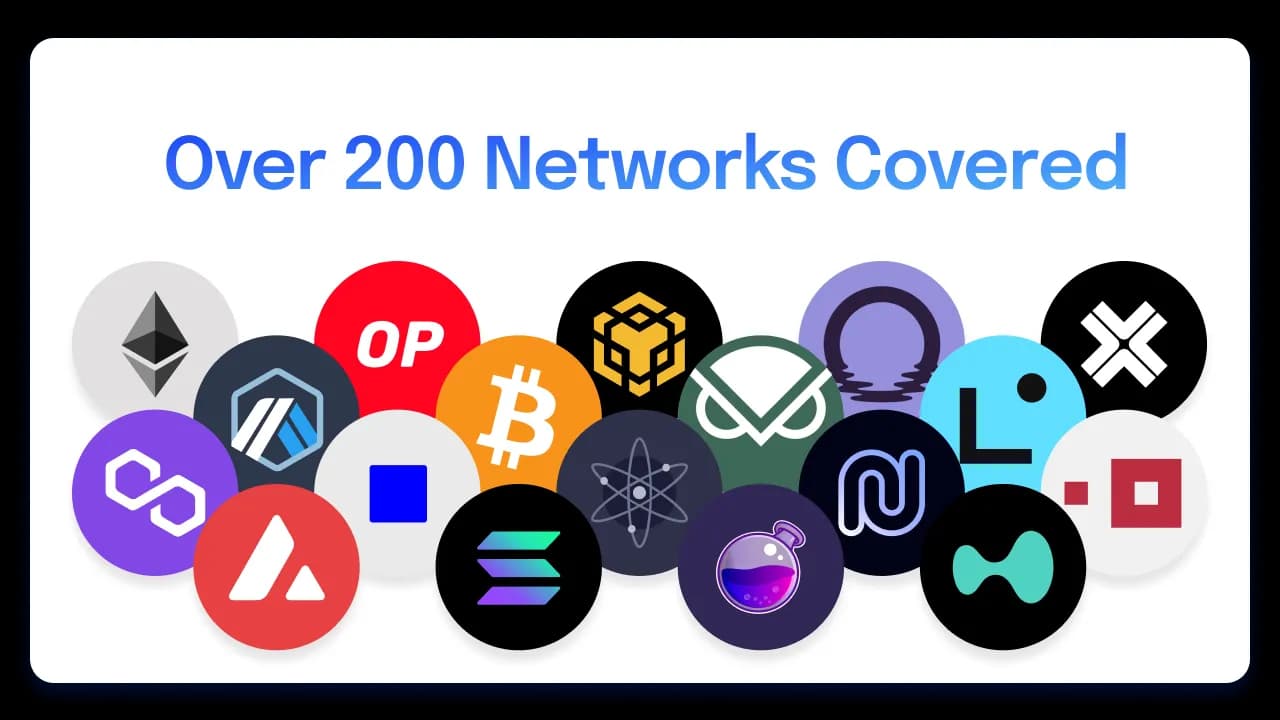
In contrast to Alchemy, Spectrum Nodes focuses more on infrastructure, offering more than 200 chains, bare-metal infrastructure, geo-distributed endpoints, load balancing, failover, and endpoint-level controls. These details truly matter when the RPC layer affects your application's behavior in production.
For teams comparing multi-chain RPC infrastructure, the most relevant strengths are broad network access, private endpoints, regional endpoint choice, transparent RPS planning, load balancing, failover, CORS, and IP allowlisting, and cross-chain GraphQL APIs.
Platform Breadth vs RPC Infrastructure Focus
This is the real comparison.
Alchemy is stronger when a team wants a broad development platform. Spectrum Nodes is stronger when a team mainly needs RPC infrastructure, private endpoints, regional access, and control over connectivity.
A longer feature list only helps if those features solve your problem. Alchemy can reduce the need to combine many tools across the Web3 stack. That is useful for teams building user-facing products that need indexed data, wallet infrastructure, notifications, simulation, and transaction tooling, alongside RPC.
Spectrum Nodes focuses more directly on the infrastructure layer. That is where endpoint behavior, chain access, failover, region choice, and capacity planning become important. If your team is already thinking about why high-performance RPC matters or how provider architecture affects real requests, we highly recommend you read about how Spectrum handles requests.
In practice, this difference becomes clear around RPC and WebSocket behavior. Alchemy supports standard JSON-RPC access, WebSocket subscriptions, tracing, debugging, and related tools via resources such as the Alchemy Subscription API. Spectrum Nodes provides managed RPC and WebSocket endpoints across many networks, with a model built around region-specific endpoints and infrastructure resilience. For teams where latency, failed requests, WebSocket stability, and traffic spikes directly affect the product, these details should be tested rather than assumed.
Private RPC Nodes and Dedicated Endpoints
Shared endpoints are often fine for testing, low-volume applications, or early-stage products. We recommend many teams start there rather than over-engineering too soon, but this changes when a project moves into production.
A private RPC node or dedicated RPC endpoint can give a team more predictable throughput, better access controls, and clearer infrastructure behavior during periods of high demand. It can also help when a project needs regional endpoint selection, stricter separation from other traffic, or a more direct conversation about capacity.
It is fair to say that Spectrum Nodes is strong in this area because private endpoints, dedicated node options, access controls, and regional endpoint selection are part of its infrastructure story. The article "Spectrum Under the Hood" provides more context on this positioning.
Alchemy also offers dedicated infrastructure options, including Dedicated Clusters and enterprise plans; therefore, this should not be framed as a one-sided comparison. The better question is whether your team wants dedicated infrastructure as part of a broad platform, or from a provider more focused on RPC and node infrastructure.
Alchemy Pricing vs Spectrum Nodes Usage Models
Alchemy pricing uses compute units and throughput units, and its public pricing includes Free, Pay As You Go, and Enterprise tiers. Compute units measure the computational resources used by apps, with heavier methods costing more than lighter methods.
Hence, that matters because not every request has the same cost. Archive calls, trace methods, debug requirements, WebSocket usage, data-heavy queries, and transaction tooling can all affect usage in different ways.
This is why teams comparing Alchemy RPC pricing should avoid looking only at request count. Method mix matters. A product making many light requests may behave very differently from one making fewer but heavier calls.
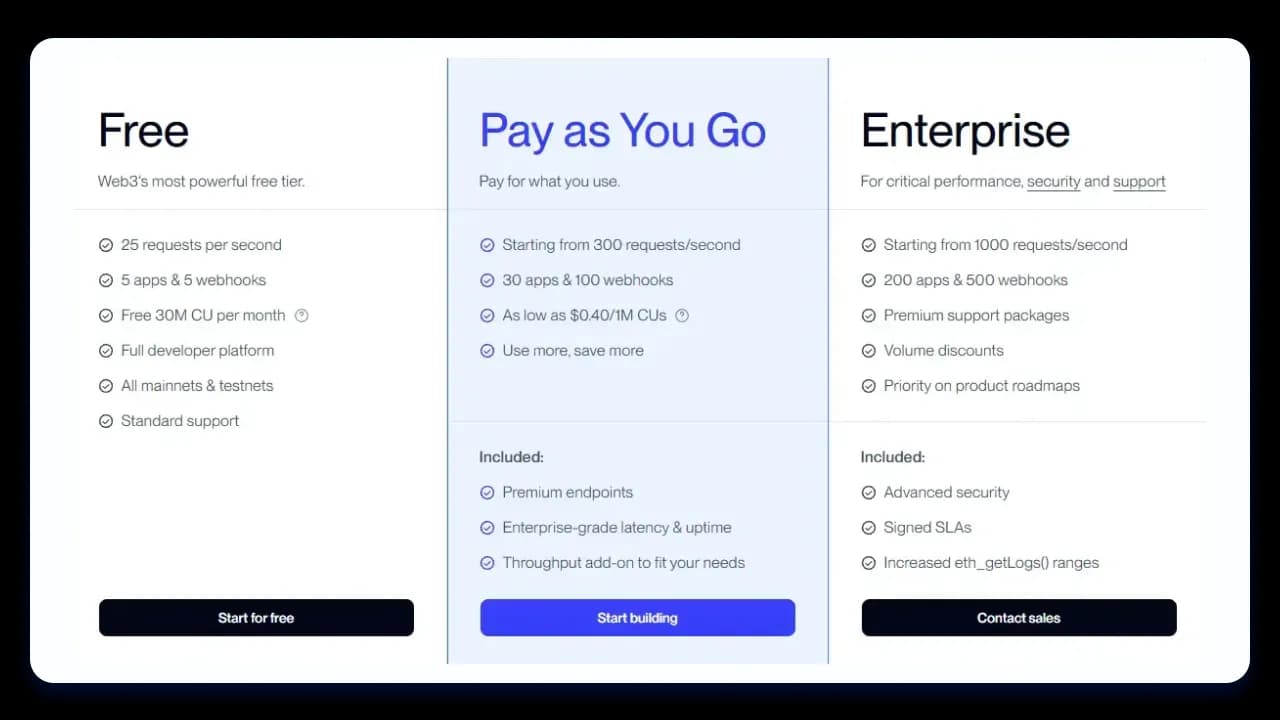
Spectrum Nodes uses a credit-and-RPS model. At the plan level, this is easier to read because buyers can see the monthly credit allowance and request rate limit, which in turn helps teams think in terms of expected traffic, endpoint usage, and capacity planning.
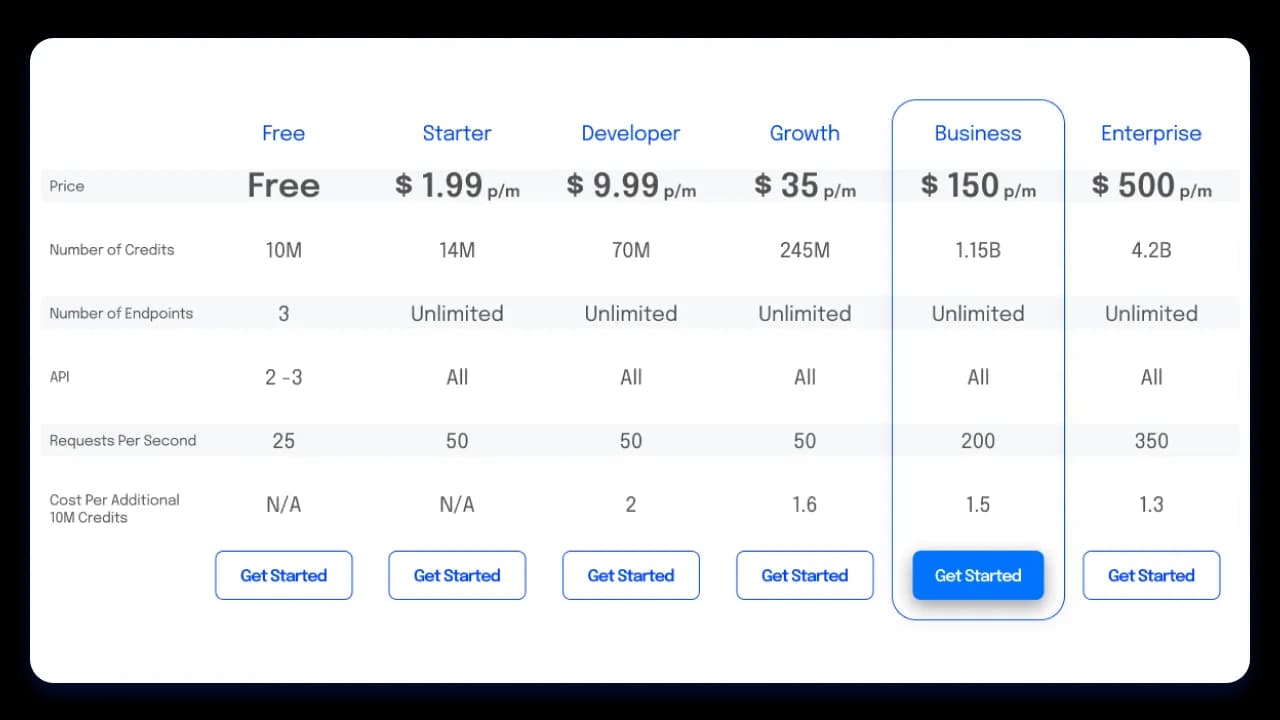
Therefore, with regard to pricing, we can conclude that neither model is automatically better, as the right answer depends on the workload.
When Alchemy May Be the Better Choice
Alchemy may be the better fit when a team needs more than just an RPC. That includes indexed token data, NFT data, price data, portfolio data, Wallet APIs, gas sponsorship, transaction simulation, webhooks, trace tools, debug tools, and a broad development platform under one account.
If a team wants to move quickly without managing several infrastructure and data providers, Alchemy may make sense. A wallet product, consumer dApp, NFT marketplace, gaming application, or analytics tool may benefit as much from Alchemy’s complementary products as from its RPC access.
When Spectrum Nodes May Be the Better Choice
Spectrum Nodes is a better fit when the buyer cares more about multi-chain RPC access, private endpoint control, regional endpoint choice, clear RPS planning, infrastructure-level resilience, bare-metal infrastructure positioning, access controls, and cross-chain API access.
For teams looking for an Alchemy RPC alternative rather than a full application development platform, Spectrum Nodes is definitely a better match. This is especially true when the RPC layer is not just a background utility. For example, if your product depends on fast reads, stable WebSockets, chain coverage, endpoint separation, or private infrastructure, the provider decision becomes more operational in nature. A practical next step is to review the supported networks, compare pricing models, and then contact Spectrum Nodes if your workload requires dedicated or regional planning.
What to Verify Before Choosing
Both providers make claims that should be checked against real workloads. That is not a criticism of either company. It is simply how infrastructure buying should work.
Before choosing, verify the supported chains, archive support, trace and debug support, WebSocket behavior, RPS and burst limits, pricing under real-world workloads, endpoint access controls, SLA terms, security reports, and support responsiveness.
For Alchemy, many performance claims are first-party and should be tested before being treated as definitive for your own application. A claim can be accurate in one context and less useful in another.
For Spectrum Nodes, serious buyers should verify current security documentation, traffic figures, performance expectations, and uptime terms during procurement. The safest comparison is practical. Build a test case that reflects your real usage, then compare the results against the commercial terms.
Final Verdict: Is Spectrum Nodes a Good Alchemy RPC Alternative?
Yes, Spectrum Nodes can be a good Alchemy RPC alternative for teams that mainly need focused RPC infrastructure, private endpoints, regional access, chain breadth, and clearer infrastructure control.
Alchemy is a strong choice for teams seeking a broad Web3 development platform, as it can reduce the need to integrate separate tools for data, wallets, simulation, webhooks, and transaction workflows.
In simple terms, we conclude that Spectrum Nodes is a stronger choice when RPC infrastructure is the main concern. Still, ultimately, the best choice depends on whether your team needs a full Web3 platform or a focused RPC infrastructure provider.
Frequently Asked Questions (FAQs)
Is Spectrum Nodes an Alchemy alternative?
Yes. Spectrum Nodes can be considered an Alchemy RPC alternative for teams that primarily need RPC infrastructure, multi-chain access, private endpoints, regional endpoint options, and access controls.
When should a team choose Spectrum Nodes over Alchemy?
A team may choose Spectrum Nodes when RPC infrastructure is the main priority. This includes use cases where multi-chain access, private endpoints, regional endpoint choice, clear RPS planning, and infrastructure control matter more than a broad Web3 application platform.
What should teams test before choosing an RPC provider?
Teams should test latency, method-level performance, archive access, WebSocket behavior, rate limits, pricing under real-world usage, failover behavior, access controls, support quality, and formal SLA or security documentation.
Do you offer custom client deployments?
Yes. Spectrum Nodes supports custom client deployments for block builders, HFT systems, MEV strategies, and security forensics. This includes:
- Modified node clients (custom Geth, Nethermind, Besu, Reth builds)
- Custom tracers for transaction simulation and forensic analysis (debug_traceTransaction for MEV detection, reorg analysis, vulnerability scanning)
- Optimized networking (direct-to-leader routing, proximity to validators/sequencers)
- Low-latency tuning (kernel params, CPU pinning, custom mempool configs for sub-ms propagation)
Unlike standard RPC endpoints, we work directly with engineering teams on bespoke setups when microseconds matter. To discuss your requirements, get in touch with us through this form. You can also explore relevant case studies.
How do Spectrum Nodes services work with our existing systems?
Get in touch with us for technical support. Whether you need standard RPC or custom client deployments, we provide software engineers, DevOps engineers, and 24/7 response teams who can be deployed within your team to integrate immediately. We help integrate everything as part of your SOPs, handling the DevOps complexity (kernel tuning, CPU pinning, sync monitoring) so your team can focus on application logic while maintaining familiar RPC endpoints. To discuss your requirements, get in touch with us through this form. You can also explore relevant case studies.